

A stain protector buys time, not immunity. A fabric couch stain protection service applies a treatment that helps repel liquids and dirt, giving you a chance to blot a spill before it reaches the fibres. A quality protector may give you 10 to 15 minutes to act, but that window isn’t a promise that every spill will come out.
It’s reasonable to want protection that lasts, especially when a couch gets daily use. How long a treatment lasts depends on the product, fabric, wear and care, so there’s no single lifespan for every sofa. Spray-on protectors wear off over time and need periodic reapplication.
This guide explains how professional fabric protection works, which treatments suit different upholstery fabrics, and how professional application compares with DIY products. You’ll also learn what can affect how long protection lasts and how routine care can help keep your couch looking its best.
Key Takeaways
- Learn how fabric type affects the protection approach, and why one treatment may not suit every couch.
- See what professional application can offer compared with DIY sprays, including why spray-on protection may need reapplying.
- Understand how everyday use and care can affect protection over time, so you can plan for your couch’s busiest areas.
- Find out how upholstery cleaning can support a practical care routine when your couch needs attention.
1. What Is Professional Fabric Protection and How Does It Work?
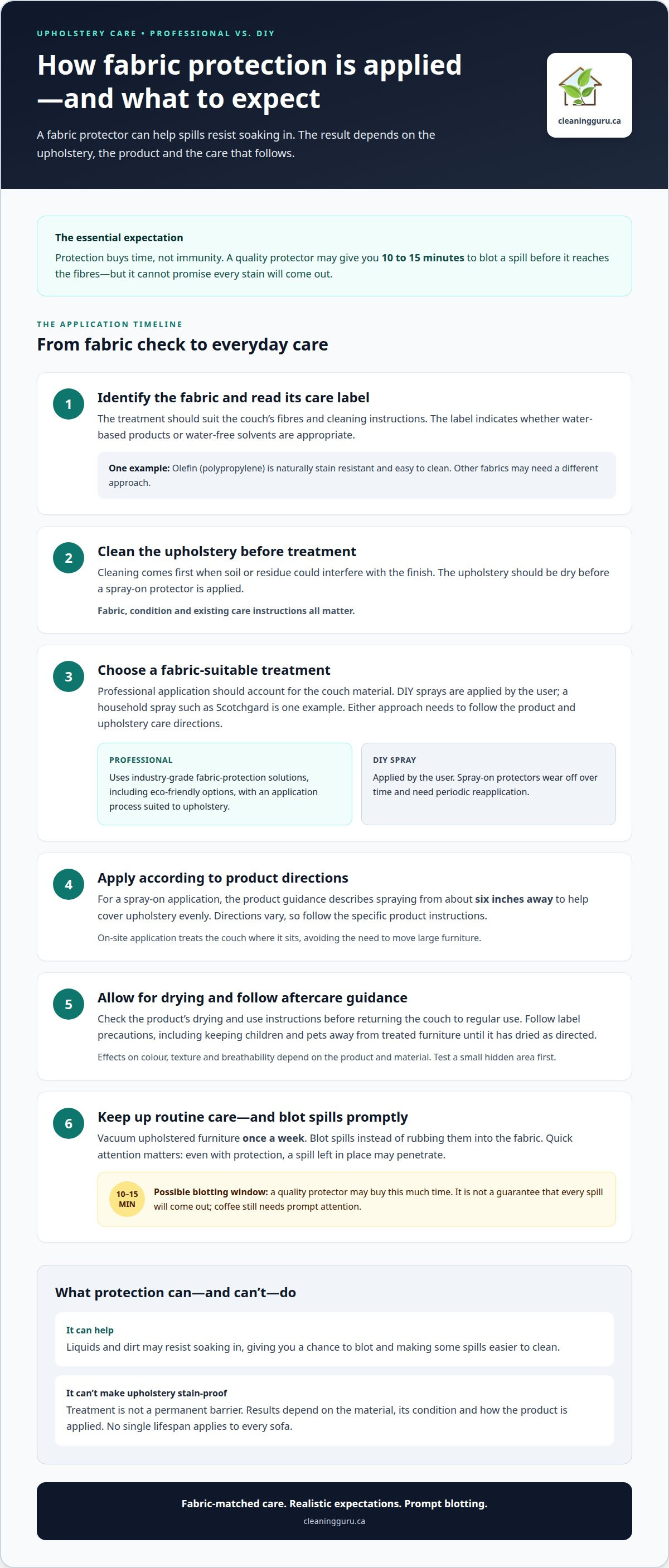
A fabric couch stain protection service applies a treatment that helps liquids and dirt resist soaking into upholstery. It creates a barrier, giving you time to blot spills before they reach the fibres. A quality protector may allow 10 to 15 minutes for blotting, but it won’t prevent every stain. For example, coffee still needs prompt attention.
Fabric choice matters. Olefin, also called polypropylene, is naturally stain resistant and easy to clean. Other materials may need care suited to their fibre, weave and cleaning instructions. Before applying a product, read the couch’s cleaning label. It indicates whether water-based products or water-free solvents are appropriate, helping you avoid an unsuitable cleaning method.
Application usually follows cleaning and drying. A fabric protector is sprayed from about six inches away, according to its product directions, to help cover the upholstery evenly. A fabric couch stain protection service should account for the couch material and its care instructions. Routine care still matters: vacuum upholstered furniture once a week, and blot spills rather than rubbing them into the fabric.
Does protection prevent all stains? No. It can make some spills easier to clean, but substances may still penetrate, especially if left in place. Are upholstery treatments covered by Canadian furniture protection plans or warranties? Coverage depends on the written plan or warranty terms, so don’t assume a separately applied treatment is included.
How much does professional protection cost in Canada? The price depends on the couch, fabric, condition and treatment, and is provided after a quote request. What products and methods are used? Professional applications use fabric-protection products suited to upholstery; spray-on protectors are one method. A fabric couch stain protection service should also explain product directions, including drying and use guidance.
Can treatment change colour, texture or breathability? Effects depend on the product and material, so test a small hidden area first. For children and pets, follow the product label’s precautions and keep them away from treated furniture until it has dried as directed.
2. Matching protection treatments to fabric types
Fabric type matters because a treatment must suit the fibres and their care directions. A tightly woven synthetic couch and a delicate textured fabric can respond differently to moisture and cleaning. Start with the upholstery label, then match the care method to its instructions. This helps avoid using a product that conflicts with the fabric’s recommended care.
Crypton fabric uses a different approach: its threads are individually treated through an immersion process. The protective layer is described as one that won’t weaken over time. That differs from a surface application, which coats upholstery after manufacture. A fabric’s construction and existing finish can therefore influence which treatment makes sense.
Alta and Nanotex are names readers may encounter when considering fabric treatments. Don’t assume a name alone explains how a couch will feel or perform. Look for the stated fabric compatibility and care directions. The same practical check applies to any treatment: the product and upholstery need to suit each other.
Factory-applied protection is built into a fabric’s finishing process, while later treatments are applied to furniture already in use. Judge the result by everyday performance: whether spills stay nearer the surface and prompt blotting makes cleaning easier. Protection can help, but it doesn’t make upholstery plastic-like or stain-proof.
Pet urine needs prompt, fabric-conscious attention because moisture can reach beyond the visible spot. One spot-cleaning method describes a mixture of 50 percent vinegar and 50 percent distilled water; it isn’t a universal treatment for every fabric. Follow the couch’s care directions before using a solution. For cleaning support before deciding on protection, explore upholstery care options.
3. Professional application compared with DIY products
A professional appointment typically starts by identifying the couch material and its care instructions. The approach should match the fabric, rather than applying one product to every sofa. Cleaning comes first when soil or residue could interfere with a finish. Follow the product directions and aftercare instructions, including when the treated furniture can be used again.
Professional fabric protection uses industry-grade solutions, including eco-friendly options. The aim is an even shield across the treated surface, not a permanent barrier against every spill. Coverage and performance depend on the material, its condition, and how the product is applied. A careful process also sets realistic expectations: treatment helps with stain resistance and cleanup, but quick blotting still matters.
How does this compare with DIY sprays? A household spray such as Scotchgard is applied by the user, while professional application uses industry-grade solutions and a process suited to upholstery. Spray-on protectors eventually wear off and need periodic reapplication. Either way, protection is not a permanent fix, and spills still need prompt attention.
On-site application treats the couch where it sits, avoiding the need to move large furniture. Consider the couch’s material, existing condition and instructions for drying before regular use. These details affect how treatment fits into household routines, especially around children, pets or frequently used seating.
How do you choose a reputable upholstery protection service in Canada? Look for a clear explanation of how the fabric is assessed, what treatment is applied, and how coverage and care are handled. A provider should describe the limits plainly, rather than promising an amazing or stain-proof result. That gives you a practical basis for deciding whether professional application suits your couch better than a DIY product.
4. Protection duration in high- and low-traffic areas
Protection wears unevenly because upholstered furniture gets different amounts of contact. The centre seat used each evening sees more friction and body oils than a rarely used chair. A couch beside the kitchen may also face repeated food spills and accidents. These everyday conditions affect how long a treatment continues helping liquids resist absorption.
Look at the whole sofa, not just its overall appearance. Armrests, cushion fronts and favourite seats receive frequent contact, while the back and sides often see less. High-use areas undergo more rubbing and cleaning, which can reduce a treatment’s effectiveness sooner than in a quiet room or seldom-used seat.
Care habits influence protection, too. Vacuum high-traffic couch areas each week to remove grit that can rub against fibres. For less-used areas, vacuum every two weeks or once a month. Blot spills promptly, and follow the upholstery’s care directions before using a cleaner. Repeated scrubbing can work against the fabric and its protective finish.
Rotate sofa cushions monthly to help them fade evenly and spread regular wear. Manufacturers recommend professional upholstery cleaning every 12 to 24 months, according to the available market guidance. Cleaning needs still depend on the couch’s use and fabric. Leather requires a different routine: apply a suitable leather conditioner every 6 to 12 months, rather than treating it like fabric.
There’s no single calendar date that suits every couch for reapplication. Check for changes in how spills behave, especially on the seats and armrests used daily. A treatment’s performance also depends on the fabric, product, cleaning, and level of contact. For help keeping upholstered seating clean between treatments, explore upholstery cleaning options.
Cleaning Guru Carpet and Home Cleaning
Cleaning Guru Carpet and Home Cleaning can help when everyday use leaves your couch needing a thorough clean. Its upholstery cleaning addresses the fabric-care side of furniture upkeep, while stain protection works as a separate treatment to help make spills easier to manage. Cleaning the upholstery can be a useful next step when soil has built up or a spill needs attention before considering protection. The right cleaning approach depends on the fabric and its care instructions, so couch material remains an important part of the conversation. If your couch needs professional cleaning, contact Cleaning Guru Carpet and Home Cleaning to discuss your upholstery.
Make your next couch-care decision with confidence
Before choosing a fabric couch stain protection service, consider how your couch fits into daily life. A sofa used for family meals has different care needs from one in a quiet sitting room. Note the fabric, where wear shows first, and which cleaning steps suit the upholstery. Those details help make your next decision practical, rather than relying on a treatment name alone.
It also helps to separate cleaning from protection. Cleaning addresses soil and spills already on the furniture; protection is preventive. If your couch needs attention now, start with the cleaning need and plan ongoing care around the fabric’s instructions. A steady routine helps you care for the furniture as household habits change.
For help with upholstery care, contact Cleaning Guru Carpet and Home Cleaning. Take the next step at a pace that feels right for your home and your couch.
Frequently Asked Questions
What Is Professional Fabric Protection and How Does It Work?
Professional fabric protection applies a finish to upholstery so spills may be easier to manage, not impossible to stain. First, identify the fabric and its care label, then match the product to the material. Follow the product’s drying and use instructions after application. If coffee spills, blot it with a clean cloth instead of rubbing it deeper into the weave.
Which couch fabrics can be treated with stain protection?
Treatment suitability depends on the upholstery’s fibres, weave, dye and existing finish. A flat-woven fabric, a textured pile and a blended material can each respond differently to moisture or a product. Don’t assume every fabric accepts the same treatment. The couch’s care label and a small test area help determine whether a particular product suits the material.
How long does couch stain protection last, and how often should it be reapplied?
Protection wears fastest on seats and armrests that see frequent contact, friction and cleaning. There’s no single reapplication interval for every couch. Watch how spills behave on regularly used areas: if they begin soaking in faster than before, the surface treatment may have worn down. Clean the upholstery before reapplying, and follow the product’s directions.
How should a couch be prepared before professional stain protection?
Vacuum the couch to lift loose dust and debris, then remove throws, toys and personal items from the cushions. Share the fabric care label and mention any previous treatments or stains, such as an old juice spill. Clear space around the couch so the upholstery can be reached. Avoid applying a household cleaner immediately beforehand, since residue can affect the treatment.
What fabric couch stain protection services are available in Canada?
Professional fabric protection is tailored to the upholstery and can be applied on-site using industry-grade solutions, including eco-friendly options. Upholstery cleaning is also available to support furniture care.


