

A fresh scent can make a room smell cleaner without removing the source of the odour. An upholstery odour neutralizer service treats affected fabric to address lingering smells from pets, spills and everyday use, rather than simply covering them with fragrance.
If you’ve aired out a sofa or used a scented spray, you may have noticed the smell return when the original residue remains. The right approach depends on the fabric and the source of the odour, so choosing a suitable cleaning method matters.
This article explains how professional odour treatment works, what you can try at home and when upholstery or carpet cleaning may help. You’ll also learn why odours in mattresses and other absorbent materials can need a different approach, and what to expect when arranging professional cleaning in Calgary.
Key Takeaways
- For a fresh spill or lingering smell, match the cleaning approach to the fabric and odour source to avoid spreading residue or leaving upholstery damp.
- Simple home steps can help with surface odours, but persistent smells may remain when the source has soaked into the material.
- Mattresses, carpets and couches can hold odour differently, so the treatment needs to suit the material and affected area.
- Learn how to tell odour neutralizing apart from fragrance that only masks a smell, and when professional upholstery cleaning may help.
How Do I Remove Odours From Upholstered Furniture?
First remove loose debris, then match the cleaning method to the fabric and odour source. Baking soda may help with surface odours, while residue trapped in the fabric can call for more thorough cleaning.
Deodorizer Application for Upholstery
Professional treatment starts by identifying the affected area and considering the fabric, odour source and moisture involved. A deodorizer should suit the material and be used according to its directions, rather than saturating delicate upholstery. For home care, sprinkle baking soda over dry fabric, leave it for at least an hour, then vacuum thoroughly. Fresh-N-Free™ is another named deodorizer; follow its label directions for upholstery use. Before treatment, clear access to the furniture and remove small items. A cleaning service should explain its process and product use clearly.
Treating Smoke, Pet and Food Odours
Smoke residue, pet accidents and food spills each call for a considered approach. Cleaning the affected fabric helps address residue, after which a suitable deodorizing treatment can be applied. This differs from adding fragrance, which may refresh a room briefly without addressing what is trapped in the upholstery. Share what caused the odour and where it occurred so the cleaning can focus on the affected areas.
Odour Treatment Safety
Enzyme treatments, ozone and other methods aren’t automatically suitable for every upholstery fabric. Safety depends on the product, the material and how the treatment is applied. Delicate fabric needs an approach suited to its care requirements, and product directions matter. Before work begins, ask for an explanation of the method and how it suits the furniture. Avoid combining products, as residues can complicate later cleaning.
Treatment Drying and Results
Professional sofa cleaning typically takes 1 to 2 hours, depending on sofa size, soiling and fabric type. That describes the cleaning appointment, not the drying time. Drying depends on how much moisture the fabric holds and the conditions around the furniture. Keep the upholstery undisturbed until it is thoroughly dry; leftover moisture can contribute to musty odours. The treatment works as the cleaning addresses the source, rather than simply adding fragrance.
Odours from pets, food spills, and everyday use
Pet accidents, dropped food and everyday body oils can leave odours in furniture. The right treatment depends on the cause and how deeply the smell has settled into the fabric.
Odours from Everyday Use
Pets can transfer oils and saliva to cushions, while food spills may leave residue beneath the surface. Dust, allergens and cooking smells can also become trapped in frequently used upholstery. A deodorizer may freshen fabric, but cleaning needs to address residue for a more lasting result. Note which cushion or area smells strongest, and mention any products you have already used.
For a new spill, blot excess liquid with a clean cloth instead of rubbing it deeper into the fibres. Then use a fabric-appropriate cleaning method; excess moisture can leave upholstery damp and musty. Steam cleaning isn’t automatically suitable for every material, so the fabric’s care instructions matter. Regular vacuuming can also remove loose debris before it settles into furniture.
Severe Pet Urine and Smoke Odours
Can upholstery odour neutralizing remove severe pet urine or smoke odours permanently? Treating the affected material can reduce odours, but a permanent result can’t be promised if residue remains deep in the fabric or underlying padding. Identify the source and affected areas before cleaning, as untreated pet odours can linger.
Smoke smells may cling to multiple surfaces, while urine can soak into cushion layers. A cleaner can assess the fabric and affected area, then choose a suitable cleaning process. Share whether the smell returns after airing out or using a deodorizer. This helps distinguish a surface odour from deeper contamination.
If a smell persists after careful spot cleaning, avoid adding more scented products. Get help with persistent upholstery odours through a cleaning approach suited to the fabric and source.
Removing odours from mattresses, carpets and couches
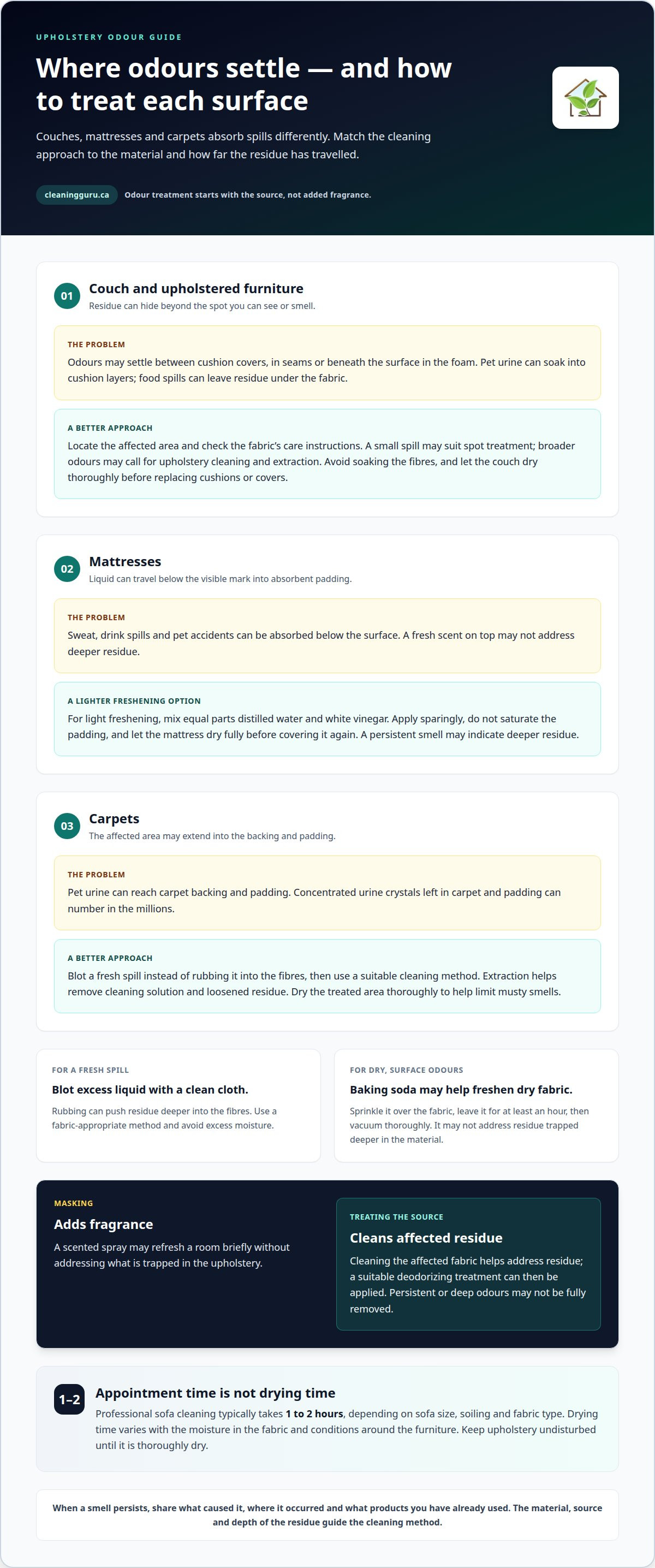
Mattresses, carpets and couches absorb spills differently, so one cleaning solution won’t suit every surface. Choose a method based on the material, odour source and how far the liquid has travelled.
On a couch, smells can settle between cushion covers, seams and the underlying foam. Locate the affected area and check the fabric’s care instructions. A spot treatment may address a small spill, while broader odours may call for upholstery cleaning and extraction. Avoid soaking the fibres, as excess moisture can leave musty smells behind. Let the couch dry thoroughly before replacing cushions or covers.
Mattresses can absorb sweat, drink spills or pet accidents below the surface. For light freshening, mix equal parts distilled water and white vinegar. Apply sparingly and let the mattress dry fully before covering it again. Don’t saturate the padding. A persistent smell may indicate deeper residue that a surface fragrance won’t address.
Carpet odours can reach the backing and padding, especially after pet urine. Concentrated urine crystals left in carpet and padding can number in the millions. Blot a fresh spill, rather than rubbing it into the fibres, then use a suitable cleaning approach. Extraction helps remove cleaning solution and loosened residue from carpets. Drying the treated area thoroughly helps limit musty smells.
For any surface, consider where the liquid travelled, not just where the smell is strongest. A mattress stain may spread beyond its visible mark, and a couch cushion may hold residue underneath. Describe the material and spill to guide the cleaning process. Targeted treatment addresses the source more directly than fragrance, helping a room feel fresher without making claims about its health.
After a spill or cleaning, let upholstery dry thoroughly before using it again. This matters when treating a couch, where affected fabric may extend beneath a cushion. Thorough drying helps prevent musty odours. Focus on drying rather than adding more fragrance, and check the treated area before replacing cushions or covers.
Odor neutralizing versus masking
A scented spray can make a room smell fresher, but fragrance doesn’t remove the source. Neutralizing targets odour-causing residue, while upholstery cleaning removes soil and spills from fabric. Deodorizing means reducing or covering unwanted smells; results depend on the product and cleaning method.
Consider a dining chair with a food stain. A citrus scent might briefly cover the smell, while cleaning addresses the spill left in the fibres. Odour treatment focuses on the smell itself, but it doesn’t necessarily restore faded colour or remove every stain. Use a chemical product only if it suits the upholstery and follow its directions. A stronger fragrance doesn’t mean better cleaning.
Bacteria can contribute to odours when food or other residue remains, but fragrance alone doesn’t remove that residue. A sound process starts by locating the source, then choosing an appropriate cleaning and deodorizing approach. Ask what the treatment addresses: surface soil, the odour source or both. This distinction helps set realistic expectations for a couch, office chairs or other upholstered furniture.
Are upholstery odour neutralizer services covered by home insurance in Canada? Coverage depends on the policy wording and the circumstances behind the damage; routine odour treatment isn’t automatically covered. Review the relevant policy terms for your situation before treating cleaning as an insured expense.
The price depends on the case and is provided after a quote request. Factors include the furniture’s size, fabric, affected area, odour source and cleaning required. For example, a small surface spill differs from odour that has reached cushion layers. These details shape the work involved, not a one-size-fits-all price.
For persistent smells, get help with upholstery odour cleaning that addresses the source rather than simply leaving fragrance behind.
Cleaning Guru Carpet and Home Cleaning: Upholstery Cleaning
Cleaning Guru Carpet and Home Cleaning offers Upholstery Cleaning in Calgary for furniture affected by spills, pet accidents or everyday use. Cleaning addresses soils and residue that can contribute to lingering smells, with the approach suited to the upholstered item and affected area.
If odours extend beyond a couch or chair, Residential Carpet Cleaning can address carpets in your home. Commercial Carpet Cleaning is available for carpeted business spaces. These services clean the affected surfaces rather than adding fragrance to cover an unwanted smell.
When you reach out, share what caused the odour and which furniture or carpet is affected. Contact Cleaning Guru Carpet and Home Cleaning to discuss your cleaning needs in Calgary.
Make a Clear Plan for Fresh Upholstery
Choose your next step based on how you use the furniture and what you want the cleaning to address. If an odour keeps returning, note where it is strongest and whether it changes after airing out. Those details can help focus the conversation on the affected upholstery instead of another scented product.
A professional upholstery odour neutralizer service is a practical option when home care hasn’t resolved the smell or you’d prefer help cleaning the furniture. You can also discuss whether you need cleaning for one upholstered item or a broader project. Clear expectations make it easier to plan around your furniture and routine.
When you’re ready to take the next step, contact Cleaning Guru Carpet and Home Cleaning to discuss your upholstery cleaning needs. A fresh, comfortable space can start with a simple conversation.
Frequently Asked Questions
What Does Upholstery Odor Removal Entail?
Upholstery odour removal involves cleaning fabric-covered furniture to address dirt and odour-causing residue in its fibres. The process depends on the material and the source of the smell. A dining chair with a food spill, for example, may need attention focused on the affected seat, while a sofa with a persistent pet odour may need assessment across multiple cushions.
What does an upholstery odor neutralizer service include?
An upholstery odour neutralizer service generally involves assessing the furniture and cleaning its fabric to address dirt and smells. Cleaning Guru Carpet and Home Cleaning offers Upholstery Cleaning in Calgary for items such as sofas and chairs. Before arranging service, note which pieces are affected and what caused the odour. This information helps clarify what cleaning your furniture needs.


