

Can cleaning carpet reduce allergens without simply sending them back into the air? Carpet can hold dust, pet dander and pollen, so it may act as a reservoir when particles build up. Allergen removal carpet cleaning can help lift some of that trapped material, but it is not a cure for allergies or a way to remove every source in your home.
It is reasonable to wonder whether cleaning might stir up dust or leave carpet damp. Results depend on the cleaning process and how well moisture is extracted. Before booking, ask the provider which method they use and what to expect afterward. Cleaning Guru Carpet and Home Cleaning provides residential carpet cleaning in Calgary using portable extraction equipment.
This guide explains what professional carpet cleaning can realistically remove, what it cannot promise and how Calgary households can prepare for service and care for carpet afterward. It also covers practical ways to limit allergens from returning, including attention to upholstered furniture. The goal is a cleaner home and a sensible next step, not a medical promise.
Key Takeaways
- Carpet can collect settled dust, pollen and pet dander. Regular upkeep helps manage what builds up in its fibres.
- Allergen removal carpet cleaning uses extraction to loosen and remove some trapped soil and particles. It does not mean allergens are killed or allergies are treated.
- Vacuuming, professional cleaning and reducing allergen sources each play a different role. Choose a practical approach for your carpet and household.
- Before arranging cleaning, identify likely sources and ask the provider about the method and drying guidance for your carpet.
- If routine care is not enough, a local estimate can help you consider professional carpet cleaning and whether upholstered furniture needs separate attention.
How allergen removal carpet cleaning can help with indoor dust and dander
Allergen removal carpet cleaning means cleaning intended to extract soil and some particles that have settled or become trapped in carpet. It describes a cleaning goal, not a medical treatment. It cannot identify the cause of symptoms, diagnose an allergy or promise an allergen-free home.
Carpet fibres can hold particles that settle from the air or arrive on shoes, clothing and pet coats. Depending on the household, these may include dust, pollen or pet dander. Carpet is only one place particles can collect. Bedding, upholstered furniture and other surfaces can also contribute to household dust.
Which allergens can settle into carpet fibres?
Think of carpet as a surface that can catch and hold some particles, not as the only source of them. Pollen may be carried indoors, while dander can settle where pets spend time. Dust can gather as part of everyday home life. What is present varies between households.
Footsteps, play or moving furniture can disturb particles resting on carpet. Some may become airborne again before settling elsewhere. That does not mean carpet always makes indoor air worse. It means cleaning and regular surface care matter if you want to manage the material collected there. Look beyond the floor, too. If a pet rests on a sofa, for example, upholstery may need attention separately from carpet.
What carpet cleaning can realistically change
Professional extraction is designed to loosen and remove soil from carpet. In the process, it may also remove some particles caught among the fibres. Results depend on the carpet’s condition, the cleaning method and whether new dust, pollen or dander continues to enter the home. Cleaning reduces material in the carpet, but it does not prevent new particles from settling.
Cleaning methods vary. Common carpet cleaning methods include approaches that use extraction as well as dry-cleaning techniques. Ask a provider which method they use and what is suitable for your carpet. Cleaning Guru uses portable extraction equipment for residential and commercial carpet cleaning in Calgary.
Keep expectations grounded. Extraction does not necessarily remove every particle, and removing particles is different from killing or deactivating them. Carpet cleaning also cannot diagnose, prevent or cure allergic conditions. If symptoms are a concern, speak with a qualified health professional. For home care, treat cleaning as one practical step alongside maintaining other surfaces and limiting likely sources where you can.
How professional carpet cleaning removes trapped allergens and where it has limits
Professional extraction loosens soil held among carpet fibres, then draws out loosened material and moisture. It can remove some particles along with the soil, but removal is not the same as killing or neutralizing allergens. Do not assume carpet is allergen-free just because it has been cleaned.
Cleaning can reduce some allergen reservoirs in carpet, but it cannot remove every indoor source. A cleaning visit addresses the carpet, not the dust or dander that may continue to arrive from elsewhere in the home.
Why extraction and thorough drying both matter
Extraction lifts loosened soil and moisture from carpet fibres. How damp the carpet feels afterward and how quickly it dries can depend on the service method, carpet construction, room conditions and airflow. There is no single drying time that applies to every home.
Ask the provider what to expect for your carpet and what steps to follow while it dries. MyHealth Alberta discusses steam cleaning carpets in guidance about dust mites. That is general health information, not a description of every professional carpet-cleaning process. Cleaning Guru uses portable extraction equipment in Calgary. Ask the company about its process and drying guidance for your job.
What carpet cleaning cannot control on its own
Particles can settle back into carpet after cleaning. Pets may bring dander into rooms, open windows can let outdoor particles in, and bedding and upholstered furniture can hold dust. Everyday activity can also move settled material around. Carpet cleaning addresses only the areas cleaned, so ongoing household sources and surface care still matter.
If symptoms continue or are severe, discuss them with a qualified health professional. A carpet-cleaning provider can explain the service and what it may remove, but cannot diagnose or treat an allergic condition.
If routine care is not enough, you can ask Cleaning Guru about carpet cleaning in Calgary and request an estimate. Share your concerns about dampness and ask what drying guidance applies before you book.
Carpet cleaning methods for allergens: compare practical options
No single approach suits every carpet or household. For allergen removal carpet cleaning, think in terms of complementary steps: routine vacuuming collects loose material, professional extraction addresses soil held deeper in carpet, and source-control habits help limit what settles there again.
Vacuuming, spot care and professional extraction
Vacuum regularly to maintain carpet between deeper cleans. The American Academy of Allergy, Asthma & Immunology includes carpet-care advice such as using a vacuum with a HEPA filter. Vacuuming is useful for routine upkeep, but it does not replace every form of deeper cleaning. For spots, follow the carpet-care instructions and avoid applying more moisture than needed.
Professional extraction may be worth considering if visible soil persists, odours recur or your household needs a more thorough clean than routine care provides. The right method depends on the carpet and the provider’s process. Cleaning Guru uses portable extraction equipment, but this equipment description is not a guarantee of allergen-removal or health results. For a broader comparison, read the benefits of professional carpet cleaning versus DIY.
Questions to ask a Calgary carpet-cleaning provider
Before booking, share useful details about your carpet and concerns. Ask what equipment and method the provider plans to use for that carpet, and how they manage moisture. Drying varies with the method and home conditions, so ask for guidance rather than relying on a universal time estimate.
Confirm which carpeted areas are included. If you are also concerned about dust or dander on a sofa, ask whether furniture cleaning is available separately. Carpet cleaning does not automatically include upholstery.
Source control matters alongside cleaning. Vacuuming helps maintain carpet, while regular care of household surfaces may help limit the material that settles back in. Choose an approach based on your carpet’s care instructions, the condition of the fibres and your household’s needs. Clear answers from a provider can help you decide whether a professional estimate is a practical next step.
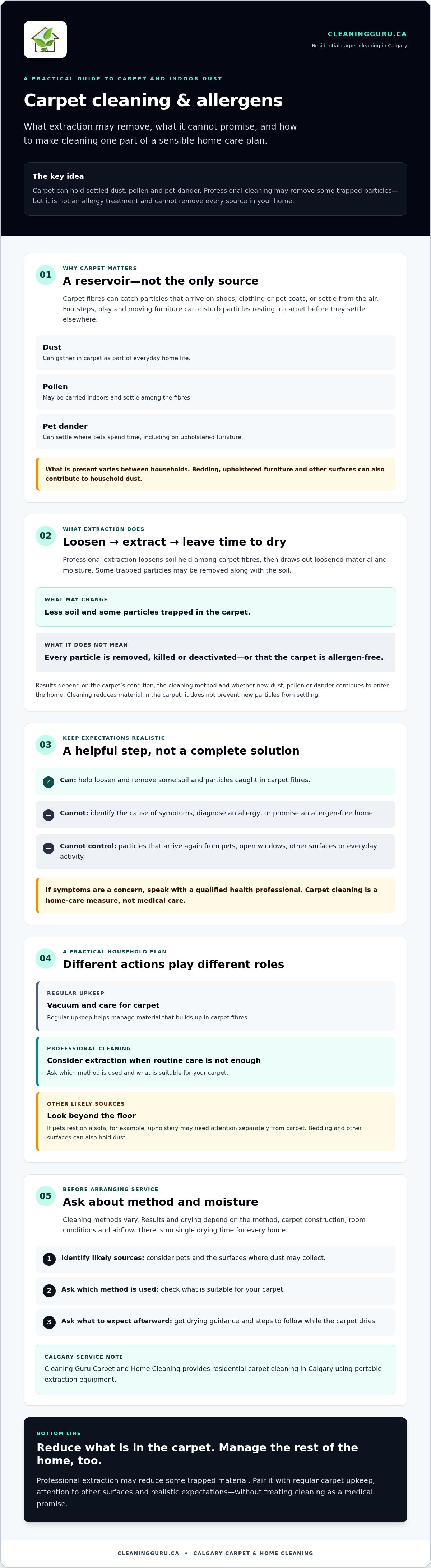
A practical Calgary plan for reducing allergens around carpets
Make carpet cleaning one part of a broader home-care routine. Start by considering likely sources, maintain the surfaces where particles collect, arrange cleaning if needed, and follow the provider’s instructions afterward. Calgary households may also notice seasonal changes in outdoor pollen, but timing and exposure vary. Check current local conditions rather than assuming one cleaning schedule suits every home.
Before vacuuming, treating a spot or arranging professional service, check the carpet-care instructions. If you are unsure which products or methods are suitable, ask the manufacturer or cleaning provider before proceeding.
Before a carpet-cleaning appointment
Make a short list of household concerns. Note which rooms get the most use, where pets spend time, and any visible soil or areas you would like the provider to assess. This helps you explain your priorities without assuming carpet is the only source of indoor particles.
Move small items from the areas being cleaned if practical, and confirm access or preparation requirements with the provider. Ask what steps suit your carpet and the planned cleaning method. If dust or dander on furniture is also a concern, upholstery may need separate attention. This Calgary upholstery cleaning guidance offers more detail on caring for another fabric surface.
After cleaning: keep the room comfortable and dry
Follow the provider’s directions for drying and room use. Do not rely on a generic drying-time estimate because methods and conditions differ. Ask what to expect for your carpet and which steps can help it dry as advised.
Between visits, vacuum regularly and maintain the surfaces and household habits that may contribute to dust or dander. Pay attention to bedding and upholstered furniture as well as floors. A clean carpet can collect new particles again, so ongoing care is part of the plan.
If symptoms persist, note when and where they occur, but do not assume carpet is the cause. Speak with a qualified health professional for guidance about persistent or severe symptoms. For a local estimate, ask Cleaning Guru about Calgary carpet cleaning and share your carpet-care questions before booking.
When to request allergen-focused carpet cleaning in Calgary
A professional estimate may be useful if soil remains despite routine care, carpeted rooms see heavy use or you would prefer a deeper clean. An estimate can help clarify which service suits the carpet and which areas are included. Think of allergen removal carpet cleaning as a cleaning option, not a promise of allergy relief or an allergen-free home.
Cleaning Guru provides residential and commercial carpet cleaning in Calgary using portable extraction equipment and offers free estimates. The company also cleans upholstery, but furniture cleaning is separate from carpet cleaning. Sharing your priorities upfront can help you understand the proposed scope and decide whether it suits your household.
What to share when requesting a free estimate
Describe the carpeted rooms you would like assessed and the carpet’s visible condition. Mention persistent soil, high-use areas, pets or other household concerns that may help the provider understand what you need. You do not need to diagnose the source of a concern. Stick to what you have observed.
Ask which method is suitable for your carpet and what drying guidance applies. Confirm which rooms or areas the estimate covers. If you are also concerned about dust or dander on furniture, ask whether upholstery cleaning can be included as a separate service. Clear answers help you compare the proposed work with your needs before deciding.
A realistic next step for Calgary households
Before proceeding, compare the suggested cleaning method with your carpet-care instructions and household priorities. Ask about preparation and drying, especially if you need to plan around children, pets or use of a particular room. Do not assume one approach or schedule is right for every carpet.
Professional cleaning can complement broader source control, but it cannot replace ongoing care of other surfaces or address every source of indoor particles. Maintain other surfaces and consider where dust or dander may collect elsewhere in the home. Carpet cleaning is one practical step, not a medical treatment.
If you are ready to discuss your carpet, rooms and concerns, request a free carpet-cleaning estimate from Cleaning Guru. A clear description gives the team a helpful starting point for an estimate, without implying a health outcome from the service.
Take a practical next step for your Calgary home
Carpet cleaning can remove some soil and particles held in carpet, but it cannot eliminate every indoor source or treat allergies. The most useful plan combines suitable cleaning with regular care of other surfaces, including bedding and upholstered furniture. Results depend on the carpet, the method used and what continues to enter the home.
If routine upkeep is not enough, allergen removal carpet cleaning may be one practical part of your home-care plan. Ask which method is suitable for your carpet, which areas are included and what drying guidance to follow. Keep expectations realistic: a cleaner carpet is a sensible goal, not a medical promise.
Cleaning Guru serves residential and commercial clients in Calgary, uses portable extraction equipment and offers free estimates. Share which rooms you would like assessed and any concerns you have, then decide whether the proposed service fits your needs. Request a free carpet-cleaning estimate and take the next step with clear expectations and a plan that works for your household.
Frequently Asked Questions
Does carpet cleaning remove allergens?
Carpet cleaning can remove some allergen-containing particles and soil, but it cannot remove every allergen from a home. Professional extraction loosens and draws out material from carpet fibres. Results depend on the carpet, its condition and the cleaning method. Other sources, such as bedding, pets and upholstery, remain separate. Allergen removal carpet cleaning is a cleaning approach, not allergy diagnosis or treatment.
Can carpet cleaning make allergies worse?
Cleaning activity may temporarily disturb settled particles, depending on the method and household conditions. Damp carpet may also be uncomfortable, so ask the provider how moisture is managed and what drying instructions to follow. Share allergy-related concerns before booking. If symptoms worsen or persist, consult a qualified health professional rather than assuming carpet cleaning is the cause.
How often should carpets be cleaned to reduce allergens?
There is no schedule that suits every carpet or household. The Carpet and Rug Institute recommends professional deep cleaning every 12 to 18 months, but carpet-care instructions, foot traffic, pets and visible soil can affect your needs. Regular vacuuming helps maintain carpet between professional visits. Check the manufacturer’s guidance and ask a Calgary carpet-cleaning provider what approach suits your carpet.
Does vacuuming remove allergens from carpet?
Vacuuming can pick up loose dust and some particles from carpet, making it useful for regular maintenance. It may not remove all material embedded deeper in the fibres, so it is not a substitute for every kind of deeper cleaning. Use a vacuum suited to your carpet and follow its care instructions. If you have allergy concerns, ask a health professional about suitable household measures.
How long does carpet take to dry after professional cleaning?
Drying time varies with the cleaning method, carpet, room conditions and airflow, so there is no reliable timeframe for every home. Before the appointment, ask the provider what to expect for your carpet and what steps to follow afterward. Follow their guidance on ventilation and room use, and avoid relying on a generic estimate if you need to plan around children or pets.
Can professional carpet cleaning help with pet dander?
Professional extraction may remove some pet dander and soil trapped in carpet, but it cannot stop new dander from entering the room. Pets may also leave dander on bedding or upholstered furniture, which carpet cleaning does not cover. Regular upkeep and attention to those other surfaces can complement carpet care. Cleaning Guru offers carpet cleaning and upholstery cleaning in Calgary as separate services.
Is professional carpet cleaning safe for children and pets?
Ask the provider about the cleaning method, products used and any precautions for your household. Safety guidance can depend on the specific service and your family’s sensitivities, so do not assume one set of instructions applies to every appointment. Tell the provider if children or pets will be at home, and follow their directions about room access, drying and when the carpet can be used again.


