

A couch isn’t the only upholstered piece that may benefit from professional cleaning. A couch sanitizing service in Calgary can help remove everyday dirt, grime, and suitable stains from fabric seating. Upholstered chairs and other furniture may also be cleanable. The fabric, construction, and level of soiling shape the cleaning method, moisture used, and drying time.
It makes sense to want a fresh-looking couch without leaving it damp longer than necessary. A surface can look clean while dirt remains in the fibres, so upholstery needs a method suited to its material and condition.
This guide explains what couch cleaning can address, which upholstered furniture may be suitable, where Calgary service is available, and what to expect from water use and drying. You’ll also learn what affects the cleaning process, so you can make a more informed decision for your home.
Key Takeaways
- Learn which kinds of dirt, grime, stains, and non-living allergens upholstery cleaning can help address.
- See how fabric type and furniture construction shape the cleaning method for sofas, chairs, and other upholstered pieces.
- Find out what to consider when looking for upholstery cleaning in Calgary and nearby communities.
- Understand how water use, fabric, and soil level affect the drying process so you can plan around a freshly cleaned couch.
- Get a clearer sense of when professional upholstery cleaning is a practical next step for your home.
Non-living allergens, dirt, grime, and stain removal
Professional couch cleaning targets soil held in upholstery fibres, not just marks visible on the surface. The fabric, type of soil, and location of a stain help determine the cleaning steps.
Dust, Pet Hair and Debris Removal
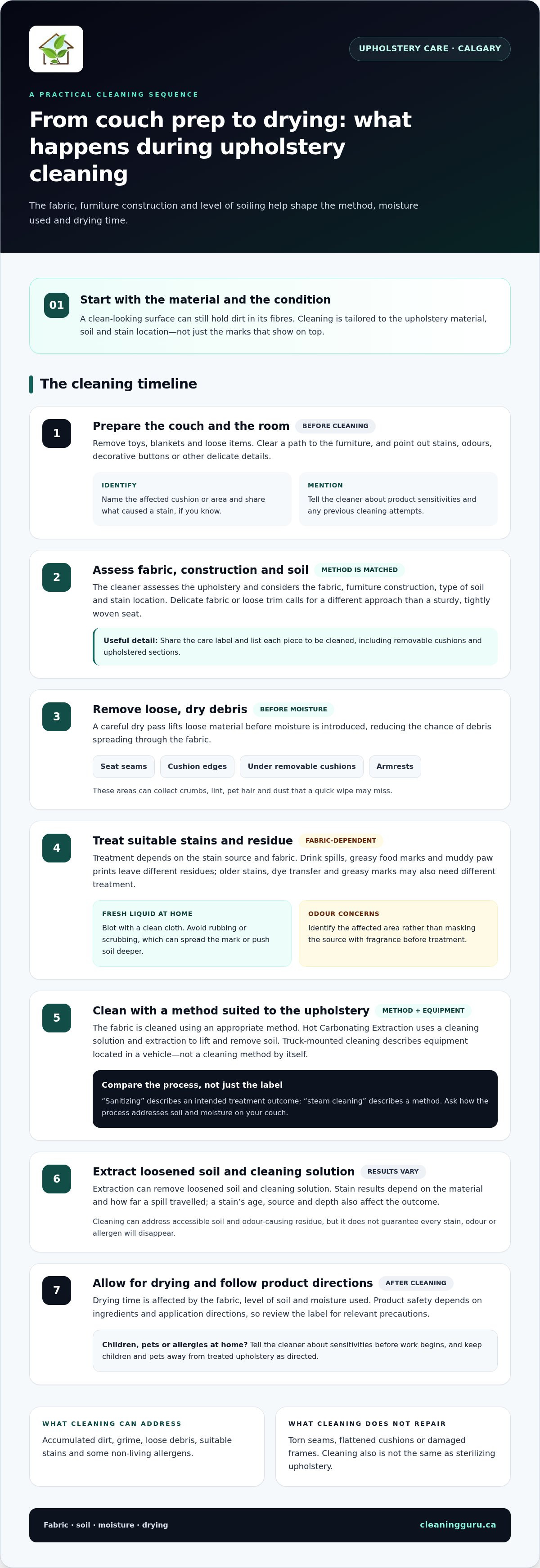
Check seat seams, cushion edges, and the space beneath removable cushions. These spots often collect crumbs, lint, pet hair, and dust that a quick wipe misses. A careful dry pass lifts loose material before moisture is introduced, reducing the chance of debris spreading through the fabric.
For example, a couch used by a shedding dog may have hair caught along seams and armrests. Point out these areas and any delicate trim before cleaning begins. Cleaning can remove dust and some non-living allergens along with soil, but it isn’t the same as sterilizing upholstery.
Stain and Odour Treatment
Stains need treatment suited to their source and the fabric. A drink spill, greasy food mark, and muddy paw print leave different residues. Blot fresh liquid with a clean cloth rather than rubbing, which can push soil deeper or spread the mark. If you know what caused a stain, share that detail to help guide treatment.
Odours can linger when residue remains within a cushion or its seams. Cleaning addresses accessible soil and odour-causing residue, but results depend on the material and how far the spill travelled. Don’t mask the source with fragrance before treatment. Instead, identify the affected cushion or area.
Fabric Protection Against Stains and Spills
Fabric protection is separate from soil removal. A stain-shield treatment is intended to help limit how quickly spills absorb, giving you time to blot them. It doesn’t make a couch spill-proof or remove existing stains. Consider protection only after the cleaning needs are clear.
For everyday care, blot spills promptly with a clean, dry cloth. Avoid scrubbing or applying household products without checking their directions for your fabric. A coloured cloth or unsuitable cleaner can transfer colour or leave residue.
What Professional Couch Sanitizing Includes
Professional couch sanitizing involves assessing the upholstery, removing dry debris, treating suitable stains, and cleaning the fabric with an appropriate method. “Sanitizing” doesn’t mean every allergen, odour, or stain will disappear. Ask what each step addresses, especially if a particular mark or smell is your main concern.
Products, Children, Pets, and Allergies
Product safety depends on its ingredients and application directions. Review the label for relevant precautions, especially if children, pets, or someone with allergies will use the room. Keep them away from treated upholstery as directed, and tell the cleaner about sensitivities before work begins.
Prepare Your Couch and Home
Before the appointment, remove toys, blankets, and loose items from the couch. Clear a path to the furniture and identify stains, odours, and delicate details such as decorative buttons. Mention any known product sensitivities and the areas needing attention. These steps help focus the cleaning on your priorities.
How Often to Clean
There’s no single useful cleaning schedule for every couch. Consider how often people use it, whether pets rest on it, and how quickly dust, hair, spills, or odours return. Clean visible marks promptly and reassess the upholstery as its condition changes.
Upholstery cleaning in Calgary and surrounding communities
Calgary upholstery cleaning methods vary by fabric, soil, and equipment. Compare the process, which furniture it suits, and how the cleaner handles difficult marks.
Couch sanitizing and upholstery steam cleaning aren’t interchangeable terms. Sanitizing describes an intended treatment outcome, while steam cleaning describes a method. Ask how the process addresses soil and moisture on your couch.
Hot Carbonating Extraction uses a cleaning solution and extraction to lift and remove soil. Truck-mounted cleaning describes equipment located in a vehicle, not a cleaning method by itself. Methods and equipment can differ, so compare what each process involves rather than relying on its label.
Cleaning Benefits and Furniture Longevity
Regular upholstery cleaning removes accumulated soil that can dull fabric and make seating look worn. Cleaning a frequently used sofa, for example, may refresh its appearance and make routine maintenance easier. It won’t repair torn seams, flattened cushions, or damaged frames. Check the fabric’s condition first, then consider whether cleaning addresses the problem you see.
Use the care label and furniture construction to guide the method. Delicate fabric or loose trim needs a different approach from a sturdy, tightly woven seat. Describe those details before the appointment so the cleaning process can be matched to the furniture.
Pet Stains, Odours and Difficult Stains
Pet accidents can leave visible marks and odours in upholstery. Blot fresh liquid with a clean cloth, then identify the affected cushion and explain what happened. Avoid scrubbing, which can spread residue or push it deeper. Older stains, dye transfer, and greasy food marks may need different treatment depending on the fabric.
Extraction can remove loosened soil and cleaning solution, but a stain’s age, source, and depth affect the result. Mention previous cleaning attempts, too. Household products may leave residue that changes how professional treatment works.
Residential Upholstery and Furniture Cleaning
Residential upholstery cleaning can address fabric furniture such as sofas, armchairs, and dining chairs. Before cleaning, list each piece, its material if known, and any marked areas. Include removable cushions and upholstered sections that need attention. This helps define the work clearly.
For a Calgary home, furniture access also matters. Clear the route to the sofa and move small items from nearby surfaces. If you’re arranging professional upholstery cleaning, describe the furniture and the main concern when requesting an estimate.
When choosing a Calgary upholstery cleaner, review the business identity, request current proof of insurance, and read recent customer feedback. Look for specific comments about upholstery, communication, and how concerns were handled, rather than relying on star ratings alone.
Calgary service area and travel
For a Calgary appointment, the full address helps plan arrival, access, and furniture placement. Neighbourhoods range from inner-city condos to homes near the city edge. Sharing the neighbourhood and building type gives the cleaning team useful context before the visit.
“Greater Calgary” can mean different things in everyday conversation. An address in Calgary is not the same destination as one in Airdrie, Chestermere, Cochrane, or Okotoks. Those communities are outside Calgary’s municipal boundaries, so don’t assume that a Calgary service area automatically includes them.
Before arranging cleaning, note the exact location and whether it’s a house, apartment, or condo. A downtown Calgary condo may require entry instructions, while a detached home may have direct street access. Clear details help plan the visit around the property.
Travel planning also depends on the building entrance and furniture location. Mention a secured lobby, elevator booking, stairs, or a long route from parking to the couch. In a multi-unit Calgary building, include the unit number and any entry details needed to reach the right door.
- Give the complete Calgary address, including the unit number where applicable.
- Describe access points, such as a lobby, elevator, stairs, or side entrance.
- Note parking arrangements and the distance from the vehicle to the furniture.
- Identify the couch location, such as a basement, upper floor, or narrow room.
Portable cleaning equipment still needs a practical route to the upholstery. A basement couch reached by a narrow staircase presents different access needs from a ground-floor sofa beside the front entrance. Share the route in advance to avoid surprises on arrival.
For homes near Calgary’s outer neighbourhoods, a precise address is more useful than a broad area label. “Northwest Calgary” can cover different distances and road approaches. A street address helps distinguish an in-city visit from travel to a nearby municipality.
Keep the couch accessible before the appointment. Move small tables, toys, and loose belongings from the path, then make sure the cleaning area is reachable. In a Calgary apartment, arrange building access and reserve any required elevator time before the visit.
When considering a Calgary-area appointment, distinguish whether the address is within the service area from the travel arrangements the location requires. A nearby community name alone doesn’t establish coverage. Use the exact destination and property details to plan the visit.
Water use and drying time
Water use depends on the upholstery fabric, soil, and cleaning method. Drying depends on how much moisture remains, the cushion construction, and room conditions.
What Determines Water Use?
A tightly woven couch and a delicate fabric may need different cleaning approaches. The cleaner considers the material, care label, visible soil, and stain history before choosing a method. A small mark on an armrest, for example, doesn’t call for the same treatment as soil across several seat cushions.
Some methods apply cleaning solution, then extract loosened soil and moisture. Extraction removes liquid from the fabric; it doesn’t make the furniture instantly dry. Ask what approach will be used and why it suits your couch’s fabric. This gives you a clearer picture of the process before the appointment.
Why Drying Time Varies
Cushion thickness affects how quickly moisture leaves the upholstery. A thin dining chair seat may dry differently from a deep sofa cushion with dense filling. Fabric type, cleaning method, airflow, and room humidity also influence drying. That’s why one fixed drying estimate doesn’t apply to every piece of furniture.
After cleaning, improve airflow around the couch. Open a window when conditions allow, or use a fan to move room air across the upholstery. Avoid stacking cushions or covering damp areas with blankets. For example, separate removable cushions so air can reach their sides and edges.
Plan Around the Appointment
Before the appointment, clear a path to the couch and move nearby items. Set aside a place for cushions if they need to be positioned separately. Keep children and pets away from damp upholstery, and follow any product directions provided during the visit. These steps keep the area accessible while the furniture dries.
Plan room use around the couch rather than putting cushions back into service immediately. A damp seat can retain moisture where fabric meets cushion filling. Check the seat, seams, and cushion edges before replacing throws or sitting down. If a section feels damp, keep it exposed to airflow.
Questions to Ask About Moisture
Ask which factors affect water use for your couch, how moisture is removed, and what can help the upholstery dry. Mention thick cushions, a basement room, or limited ventilation, as these details affect airflow and drying conditions. A couch in a closed room, for example, needs a different drying setup from one beside an open window.
Don’t judge dryness by the fabric surface alone. Check seams and cushion edges, where moisture may linger after the top feels dry. Leave the couch uncovered and maintain airflow until those areas feel dry too. This simple check helps you decide when normal use can resume.
Sofas, chairs and other upholstered furniture
Upholstery cleaning can suit more than a living-room couch. A fabric armchair, dining chair, ottoman, or padded headboard may also be a candidate. The right approach depends on the covering, seams, trim, and cushion construction. Identify each piece you want cleaned and check its care label. These details help the cleaner choose a suitable method.
Look beyond the main seating surface. A sectional has separate cushions, crevices, and corners; a recliner may include attached panels and moving parts. Note which sections are fabric and which are leather, wood, or metal. A fabric seat with wooden arms, for example, needs different attention from an all-upholstered chair.
Furniture design can affect how easily it can be cleaned and dried. On March 25, 2026, an Alberta Health Services inspection at Alpha Bar & Restaurant in Calgary found a fabric sofa bed and pillows that were not easily cleanable or impervious to moisture. This finding highlights why fabric and construction matter when assessing upholstered furniture.
Check labels and condition before arranging cleaning. A care tag may identify a suitable method, while faded colour, loose stitching, or worn piping can affect the process. Show the cleaner any areas of concern. A close-up of a stain or a photo of the tag can help you describe the piece clearly.
- Dining chairs: identify fabric seats and any non-fabric frames.
- Ottomans: note whether the top lifts or stores household items.
- Recliners: point out seams, controls, and moving sections.
- Sofa beds: explain how the bed opens and where cushions sit.
- Headboards: describe wall clearance and upholstered panels.
Which pieces can be treated depends on their materials and construction, not just the furniture category. A fabric dining chair and a vinyl dining chair may look similar but need different care. Make a short inventory, naming the material when known and noting attached trim or removable cushions.
Clear access around each item before the appointment. For a sectional, move side tables away from the corners; for a headboard, make the panel accessible. Mention delicate buttons, fringe, or loose seams. These details help focus the cleaning plan on the upholstery without overlooking nearby surfaces.
If your sofa, chairs, or ottoman need attention, arrange professional upholstery cleaning for the pieces you’ve identified.
Cleaning Guru Carpet and Home Cleaning: Residential Carpet Cleaning
Cleaning Guru Carpet and Home Cleaning can help when your couch or home’s carpets need professional attention. Its Upholstery Cleaning is suited to upholstered furniture, while Residential Carpet Cleaning addresses carpeted rooms. If you’re planning a broader refresh, arranging both can help cover the surfaces that need care.
When requesting a free estimate, share which furniture or carpeted areas need cleaning. Details such as upholstery type, visible stains, and rooms involved help describe the work you have in mind. Commercial Carpet Cleaning is also available for business spaces that need attention to upholstered seating or carpets.
For help with couch or carpet cleaning in Calgary, contact Cleaning Guru Carpet and Home Cleaning or visit cleaningguru.ca.
Make a Clear Plan for Your Upholstery
Your next step is simple: decide which pieces need attention and what matters most, whether that’s a cleaner-looking seat, help with a lingering odour, or care for several upholstered items. Note the fabric type if you know it, identify areas of concern, and consider how you’ll use the room while the furniture dries. A little preparation makes it easier to describe the job and plan around your household.
If you’re considering a couch sanitizing service in Calgary, Cleaning Guru Carpet and Home Cleaning offers Upholstery Cleaning, Residential Carpet Cleaning, and Commercial Carpet Cleaning. These services can help when you’re planning care for upholstered furniture, carpeted rooms, or a business space. Request a free estimate to discuss the work you have in mind.
Contact Cleaning Guru Carpet and Home Cleaning to take the next step. A fresh start for your furniture can begin with a straightforward conversation.
Frequently Asked Questions
How much does couch sanitizing cost in Calgary?
The cost depends on the couch and work involved, and Cleaning Guru Carpet and Home Cleaning provides a free estimate. Factors include the furniture’s size, fabric, number of pieces, and areas needing attention. A single-seat chair and a large sectional, for example, require different amounts of work. Describe the furniture and cleaning you need when requesting an estimate, so the scope is clear.
What sanitizing methods and products do Calgary couch cleaners use?
Methods and products vary with the upholstery fabric, its condition, and the cleaning task. A couch sanitizing service in Calgary may use an upholstery-appropriate process to loosen soil, followed by extraction to remove liquid and residue. Product choice should suit the fabric rather than simply target a “sanitizing” label. Share the care tag details and any household sensitivities before arranging cleaning.
How long does a sanitized couch take to dry?
Drying time depends on the fabric, cushion thickness, moisture used, airflow, and room conditions. A deep sofa cushion can retain moisture differently from a thin upholstered chair seat. After cleaning, separate cushions when possible, leave the couch uncovered, and move air through the room with a fan. Check seams and cushion edges as well as the surface before returning the furniture to regular use.
Do Calgary couch sanitizing services remove odours, stains, dust mites, and allergens?
Upholstery cleaning can address dirt, odour-causing residue, suitable stains, and some non-living allergens. Cleaning Guru Carpet and Home Cleaning’s Upholstery Cleaning focuses on removing allergens, dirt, and odours from furniture fibres. Dust mites are living organisms, so removing surface soil doesn’t prove they’re gone. A stain’s source, age, and depth also affect how it responds to cleaning.


