

Aggressive scrubbing is often the quickest way to turn a minor spill into a permanent carpet disaster. When a mug of coffee slips or a pet has an accident, instinct tells you to grab a towel and rub hard. That friction actually frays delicate yarn fibres and drives liquids deeper into the backing. Learning how to remove stains from carpet effectively starts with staying calm and protecting your pile from the very first blot.
We understand the immediate panic that strikes when an accident happens on your floors. You worry about permanent discolouration, lingering odours, or leftover detergent residue attracting dirt days later. Fortunately, lifting spots safely doesn't require harsh chemicals or heavy elbow grease. You will master the exact cleaning chemistry needed to neutralize wine, grease, and pet messes without bleaching fibres or dulling your carpet's appearance.
Below, you'll find reliable, step-by-step methods to tackle both fresh and set-in spots, alongside clear guidance on when a stubborn spill requires professional extraction to rinse completely clean.
Key Takeaways
- Master proper blotting mechanics by working from the outer edges inward to lift liquids without spreading colour or fraying yarn fibres.
- Discover how to remove stains from carpet by matching your cleaning chemistry to the specific spill, whether neutralizing acidic tannins or breaking down oily grease.
- Prepare gentle, pantry-based spot cleaners that lift soil without leaving behind sticky soap residues that rapidly attract fresh dirt.
- Understand the mechanics of stain wicking so you can implement proper drying methods and keep deep moisture from resurfacing.
- Identify when stubborn spots or lingering pet odours exceed DIY limits and require professional hot-water extraction to rinse clean.
Immediate First Aid: The Golden Rules of Carpet Stain Removal
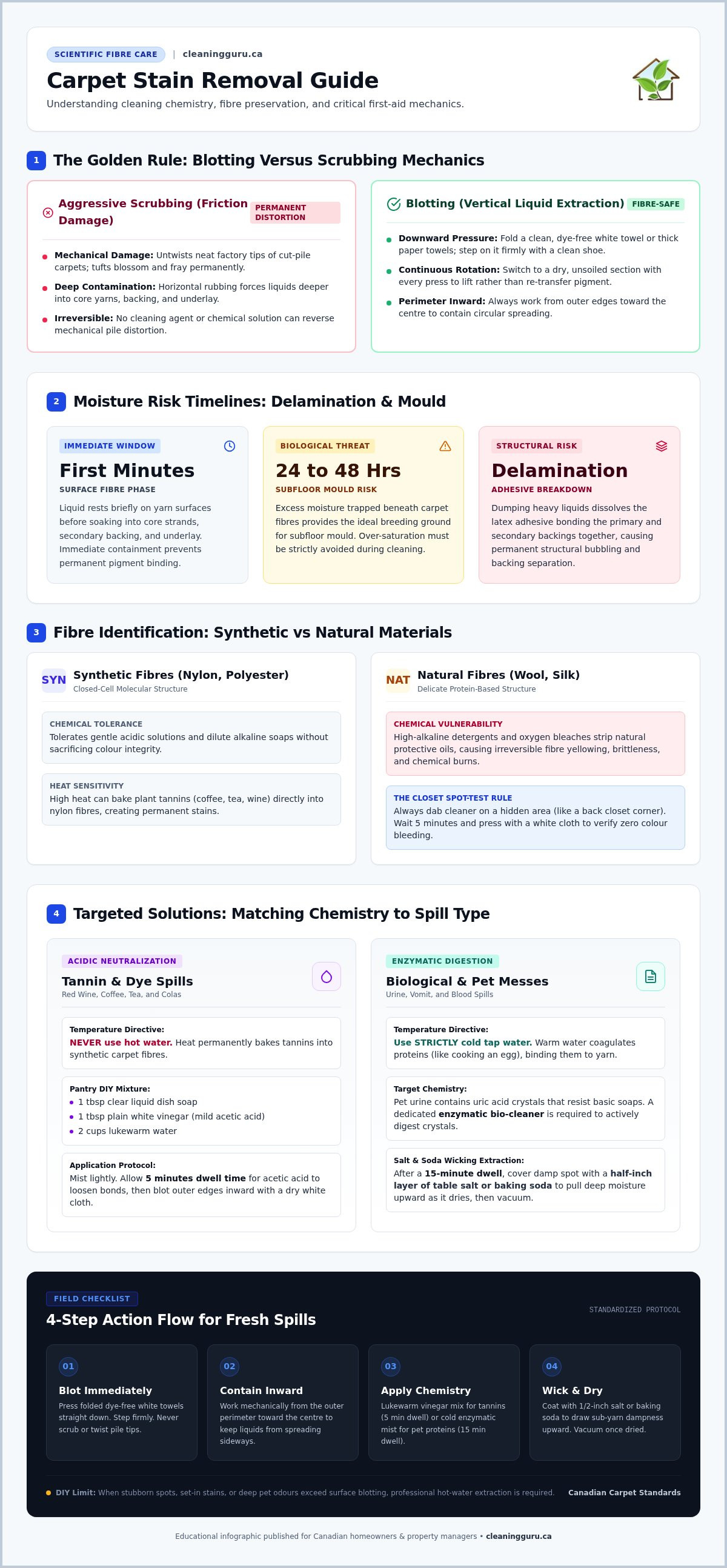
Speed is everything when a spill happens. Fresh liquid rests on the outer surface of your carpet fibres for only a few minutes before sinking deep into the core yarns, backing, and underlay. Understanding the basics of carpet cleaning methods helps you stabilize the damage before pigments bind permanently with the material.
Always work from the outer perimeter of the spill inward toward the centre. This circular containment prevents the liquid from spreading across adjacent, clean fibres. Avoid dumping large amounts of water or cleaning solution over the spot. Over-saturation breaks down the latex adhesive holding the primary and secondary carpet backings together, a costly issue known as delamination. Excess moisture trapped beneath the carpet also creates an ideal breeding ground for subfloor mould within 24 to 48 hours.
Blotting Versus Scrubbing: Preserving Your Carpet Fibre
Never scrub a fresh spill. Aggressive horizontal friction quickly untwists the neat factory tips of cut-pile carpets. Once yarn tufts blossom and fray from rough rubbing, that fuzzy texture change is permanent. No cleaning agent can reverse mechanical pile distortion.
Instead, follow these basic rules:
- Apply steady downward pressure: Fold a clean, dye-free white towel or thick stack of plain paper towels directly over the liquid. Step on it firmly with a clean shoe to pull liquid straight up.
- Rotate continuously: Check the cloth frequently. Switch to a dry, unsoiled section with every press so you lift the spill rather than transferring pigment right back into the pile.
Carpet Fibre Identification: Synthetic vs Natural Materials
How you treat a spot depends entirely on what your carpet is made of. Modern synthetic fibres, like nylon and polyester, feature closed cell structures. They can tolerate gentle acidic mixes or dilute alkaline soaps without losing their colour integrity.
Natural materials tell a completely different story. Wool and silk contain protein fibres that react terribly to harsh chemicals. High-alkaline detergents or oxygen-based bleaches strip their natural protective oils, causing irreversible fibre yellowing, brittleness, and chemical burns. When testing how to remove stains from carpet safely, always dab your chosen mixture on an out-of-the-way spot first, such as the back corner of a clothes closet. Wait five minutes, press with a white cloth, and check for colour bleeding before treating the open room.
Targeted Solutions: How to Treat Specific Household Stains
No universal spot cleaner exists. Treating red wine the same way you treat bacon grease guarantees disappointment and can permanently lock colours into the yarn pile. Learning how to remove stains from carpet successfully relies on basic chemistry. You have to match your cleaning agent to the molecular structure of the spill. As detailed in The Carpet and Rug Institute's Spot Solver, breaking down specific compounds requires distinct pH balances and solvent actions.
Tannin and Dye Spills: Red Wine, Coffee, and Colas
Coffee, tea, and red wine contain naturally occurring plant tannins that chemically act like textile dyes on pale carpet. Heat bakes these tannins permanently into synthetic fibres like nylon, so never use hot water. Instead, mix one tablespoon of clear liquid dish soap, one tablespoon of plain white vinegar, and two cups of lukewarm water. Mist the solution lightly over the spill. Let it sit for five minutes so the mild acetic acid loosens the bond, then blot from the outside inward with a dry white cloth.
Pet Stains and Biological Messes: Urine, Vomit, and Blood
Biological stains contain heavy protein chains. Warm water coagulates these proteins, binding them tightly to carpet yarn just like cooking an egg. Always use cold tap water when initially dabbing blood or vomit. For pet accidents, standard household soaps and air fresheners cannot eliminate the lingering scent. Cat and dog urine leaves behind concentrated uric acid crystals that resist basic detergents. You need a dedicated enzymatic bio-cleaner that actively digests these crystals. For fresh accidents, follow this sequence:
- Press down several folded paper towels to extract as much liquid as possible.
- Saturate the area with an enzymatic spray and allow it to dwell for 15 minutes.
- Cover the damp spot with a half-inch layer of table salt or baking soda to pull remaining moisture upward as it dries, then vacuum thoroughly.
Oil, Grease, and Winter Slush: Removing Heavy Grime
Oily spills from salad dressings, butter, or bicycle chains require a surfactant capable of breaking down stubborn lipid molecules. First, scrape up thick surface residues with a dull butter knife. Apply a drop of clear degreasing dish soap diluted in warm water, working it gently into the tips of the pile before blotting clean.
Canadian winters introduce another headache: chalky white de-icing salt and gritty mud tracked across high-traffic hallways. Road salts are alkaline mineral compounds that crust as they dry. Dissolve one part white vinegar into two parts warm water to neutralize the chalky minerals, allowing the salt to break down before you blot it away. If winter slush and heavy oils leave your entryways looking dingy and matted despite spot cleaning, booking a thorough residential carpet cleaning ensures every layer of deep grit rinses completely away.
DIY Carpet Cleaning Solutions You Can Make at Home
You don't need expensive store-bought bottles to manage common domestic spills. A few basic pantry items deliver safe, effective results without exposing your household to harsh industrial chemicals. When learning how to remove stains from carpet using home ingredients, precise mixing ratios protect your floor from chemical burning and soap accumulation.
Safety must always come first when mixing household cleaners. Never mix chlorine bleach with ammonia, vinegar, or acidic dish detergents. This hazardous combination releases toxic chloramine or chlorine gases that cause immediate respiratory damage. Stick to simple, mild pantry staples mixed strictly in clean spray bottles.
The Essential Mild Detergent and Vinegar Formula
Every reliable home spot-cleaning kit starts with two balanced mixtures:
- Detergent Solution: Dissolve one teaspoon of clear, colourless dishwashing liquid into one litre of lukewarm water. Use clear soap only; coloured varieties contain synthetic dyes that can permanently tint pale pile yarns.
- Acidic Rinse: Combine one part plain white vinegar with two parts lukewarm water. This mild acid breaks down alkaline mineral salts and neutralizes organic odours.
Always apply the detergent mix first to break surface tension and loosen soil. Once blotted dry, mist the vinegar rinse over the exact same spot. This step restores the carpet's natural slightly acidic pH balance and dissolves residual surfactants. Finish by dabbing the area with a towel dampened with pure cold water to flush out any remaining soap traces.
Common DIY Mistakes That Ruin Carpets
Well-intentioned DIY efforts often backfire because of product choice. Heavy laundry detergents and bar soaps should never touch carpets. They carry heavily alkaline formulations designed for washing machines that use 40 to 60 litres of water to rinse away suds. On carpets, these concentrated surfactants stay trapped in the backing, leaving behind a sticky film that rapidly attracts dirt like a magnet.
Baking soda requires equal caution. While sprinkling a thin layer helps absorb damp grease or lingering odour, dumping wet baking soda slurries onto deep pile causes serious headaches. Fine sodium bicarbonate particles sift straight down into the primary backing. Once there, the powder cakes into hard, concrete-like deposits that clog vacuum filters and wear down yarn tufts from beneath. If you want to know how to remove stains from carpet without creating new maintenance problems, keep dry powders light, keep detergents clear, and rinse thoroughly every single time.
How to Prevent Stain Wicking and Rapid Re-Soiling
You cleaned a fresh spill, watched the mark vanish, and felt a sense of relief. Three days later, a dark shadow creeps back into the exact same spot. This frustrating issue is usually caused by one of two culprits: stain wicking or detergent residue. Knowing how to remove stains from carpet involves more than just lifting surface grime; you must also prevent subterranean moisture from returning to the surface.
Understanding the Science of Wicking in Carpet Fibres
When liquids penetrate deeply, they flow past surface pile yarns and settle inside the carpet's primary backing and foam underlay. As the room warms, surface fibres dry first. This evaporation creates a natural capillary action, drawing trapped moisture and suspended pigments straight back up to the yarn tips like liquid through a drinking straw.
You can easily prevent wicking with a simple compression technique:
- Stack four to six clean, dry white paper towels or a thick microfibre cloth over the freshly treated area.
- Place a heavy, flat object, such as a stack of hardcover books or a clean plastic storage bin weighted with books, directly on top.
- Leave the weight in place for 8 to 12 hours. Continuous downward pressure transfers deep moisture into the absorbent paper rather than letting it evaporate up the yarn.
Speed up room evaporation by running a portable floor fan or turning on your dehumidifier to circulate dry air across the floor.
The Critical Clean-Water Rinse Phase
Rapid re-soiling happens when cleaning agents are left behind. Over-the-counter spot treatments and DIY soap formulas break up grease, but their chemical surfactants dry into a tacky, invisible residue. This sticky film grabs dust, pet dander, and shoe dirt every time someone walks across the room. Within two weeks, the area looks darker and dirtier than the original stain.
Always follow every spot treatment with a plain water rinse. Mist clean tap water over the area and blot repeatedly with a dry cloth until no soapy foam transfers to your towel. If stubborn spots have repeatedly wicked back or years of DIY spot sprays have left your high-traffic pathways feeling stiff and sticky, consumer tools cannot flush out that trapped detergent. In that situation, schedule a professional residential carpet cleaning to rinse away embedded soap residues with dedicated extraction equipment and bring your fibres back to a truly clean state.
When to Call a Professional: Safe Limits of DIY Spot Removal
Home spot treatments solve immediate emergencies, but they have definite boundaries. Pushing past those boundaries often causes permanent colour loss, distorted tufts, or hidden mildew underneath. Recognizing the proven benefits of professional carpet cleaning helps you protect your flooring investment when a stain outmatches standard household chemistry.
Certain materials require hands-off restraint from homeowners. Delicate natural fibres like woven wool, fine silk blends, and textured Berber loops snag or shrink easily under wet domestic treatment. When dealing with broad traffic-lane discolouration across living rooms, repeated store-bought remedies simply drive surface grime deeper into the underlay instead of lifting it away.
High-Risk Stains Requiring Expert Heat and Extraction
Some stubborn compounds form unbreakable chemical bonds if handled improperly. Permanent printer inks, melted candle wax, dark cosmetic hair dyes, and old pet accidents soaked into the subfloor cannot be resolved with a spray bottle and paper towels.
Grocery-store rental machines frequently worsen these tricky situations. Their weak vacuum recovery leaves carpets soaked for days, while their lack of controlled heat fails to liquefy dense oils. Experienced technicians utilize specialized portable hot-water extraction technology instead. These advanced portable systems easily access high-rise apartments, urban condominiums, and detached family homes without stringing cumbersome hoses through open street-level doors. Powerful extraction safely injects hot water and instantly recovers it, lifting set-in pigments completely clear of your floor.
Investing in Long-Term Carpet Longevity
Carpet wear rarely comes from surface spots alone. Microscopic dirt particles and sharp silica grit work their way deep into the base of the pile with daily foot traffic. Every step grinds these razor-sharp particles against delicate yarn filaments, wearing down paths and causing irreversible dullness. Deep professional extraction flushes this abrasive sand away, restoring pile buoyancy and significantly extending your flooring lifespan.
Planning regular care keeps your entire home fresh. You can review seasonal carpet cleaning cost Calgary details to schedule routine maintenance that fits your household schedule. While scheduling floor care, pairing your appointment with targeted upholstery cleaning Calgary refreshes tired couch fabrics and accent chairs, ensuring your entire living area stays vibrant, hygienic, and free of stubborn lingering odours.
Restore Freshness and Protect Your Floors
Knowing how to remove stains from carpet comes down to patience, gentle downward blotting, and matching your cleaning chemistry to the specific spill. Prompt action keeps fresh spills from locking into pile yarns, while a thorough clean-water rinse ensures no sticky detergent remains behind to attract new dirt or cause recurring wicking.
When deep pigments, stubborn odours, or set-in traffic patterns exceed DIY limits, our experienced Calgary team is ready to step in. Cleaning Guru relies on advanced portable hot-water extraction technology to reach detached homes and high-rise apartments alike without cumbersome exterior hoses. We apply family-friendly, fibre-safe solutions that rinse completely clean, leaving your floors soft, fresh, and free of residue. Operating Monday through Saturday across the Calgary area, we are always here to help you maintain a cleaner, healthier living space. Request your free estimate with Cleaning Guru today and bring long-lasting comfort back to your favourite rooms.
Frequently Asked Questions
Can baking soda and vinegar damage my carpet if left on too long?
Yes, leaving a baking soda and vinegar paste on your carpet can cause lasting pile damage. Vinegar is an acid that weakens carpet backings when left damp for extended periods. Fine baking soda particles also filter deep into the underlay, forming hard, abrasive clumps that wear down yarn tufts as you walk over them. Keep DIY applications light and never let wet pastes dry into the floor.
Why does a stain reappear on my carpet a few days after I cleaned it?
A reappearing spot is almost always caused by stain wicking or sticky soap residue. When a spill sinks into the backing, surface evaporation acts like a straw, pulling trapped moisture and pigment back to the yarn tips. In other cases, excess detergent left behind attracts fresh soil like a magnet. Learning how to remove stains from carpet properly requires thorough weighted blotting and a dedicated clean-water rinse.
Is it better to use hot or cold water when treating fresh carpet spills?
Cold or lukewarm water is much safer for treating almost every fresh household spill. Hot water instantly coagulates protein-based messes like blood, eggs, or milk, permanently cooking the stain into your carpet yarn. High heat also bonds synthetic colourings and tannins from red wine into nylon fibres. Use cold water for biological messes and lukewarm water when gently rinsing away light soap solutions.
How do I remove old, dried-in stains from carpet without professional tools?
You can tackle old spills by first rehydrating them with a light mist of lukewarm water mixed with a single drop of clear dish soap. Let the mist sit for ten minutes to soften the crust, then scrape off loose residue with a dull spoon. Understanding how to remove stains from carpet safely means blotting patiently without rubbing; however, heavily set-in pigments deep in the backing usually require hot-water extraction.
Will store-bought carpet spot cleaners bleach or discolour my carpet fibres?
Many commercial spot treatments contain harsh oxidizers or optical brighteners that can permanently bleach dyed carpet fibres. Strong alkaline formulas are especially damaging to wool, often leaving pale, yellowed halos where the colour was stripped away. Even on synthetic polyester or nylon, aggressive chemical sprays can alter carpet texture. Always patch-test commercial cleaners in an out-of-the-way closet corner before treating your living areas.
How can I remove pet urine smell completely from carpet fibres and underlay?
Neutralizing pet urine odours requires an enzymatic bio-cleaner rather than a standard perfumed spray. Dried pet urine leaves behind concentrated uric acid crystals that release pungent odours whenever humidity rises. Enzymatic solutions break these crystals down at a molecular level. For deep accidents that saturate the underlay in Calgary homes, portable hot-water extraction equipment is needed to flush out the pad without soaking your subfloor.
Can I use dish soap on wool carpets safely without causing damage?
You can use dish soap on wool only if it is clear, dye-free, and heavily diluted in cool water. Wool is an organic protein fibre that reacts poorly to high alkalinity and harsh degreasers, which strip away natural protective lanolin oils. Use no more than a few drops per litre of water. Always blot gently and rinse with a damp cold cloth to keep fibres soft and resilient.


