

Apartment carpet cleaning is about more than the floor. A portable equipment carpet cleaner for apartments uses a compact machine to apply cleaning solution and extract soil and moisture from carpet; portable steam cleaning follows this basic process. One portable carpet cleaner product is described as providing 18,000 Pa of suction, though a machine’s specification alone doesn’t explain how a service cleans your home.
If you’re searching for a portable equipment carpet cleaner for apartments, first consider the size of the job and your building’s access. Portable equipment can be brought into Calgary apartments, including upper-floor units, and used to clean carpets and upholstery in place. Here’s what to consider before using a machine or arranging professional cleaning.
Key Takeaways
- Learn how portable cleaning equipment can be matched to carpet, upholstery, and other soft surfaces.
- See what makes portable cleaning a practical approach for apartment homes and high-rise condos.
- Understand the steps that help address spots while avoiding common cleaning missteps.
- Find out which job details shape a service estimate, so you know what information matters when requesting one.
Cleaning equipment for carpets, upholstery, and soft furnishings
A portable equipment carpet cleaner for apartments applies cleaning solution and extracts loosened soil and moisture. Portable machines can be carried into a home without a truck-mounted setup. One portable carpet-cleaner product lists suction at 18,000 Pa, but that specification describes one product, not every machine or result. Match the equipment to the surfaces and the size of the cleaning job.
Before cleaning landlord-owned carpet, review your lease, carpet-care instructions, and the machine’s directions. Check fibre restrictions and test the solution in an inconspicuous area. Wool carpet, for example, may need different care than synthetic carpet. Stop if the test changes the colour or texture, or if the care instructions conflict with the machine directions.
The solution tank holds cleaning liquid, while the recovery tank collects extracted moisture and soil. Clean one manageable area at a time, make controlled passes, and avoid saturating the carpet. Use a portable equipment carpet cleaner for apartments according to its instructions, including guidance for attachments and extraction.
For a sofa or dining chair, an upholstery attachment directs solution and suction across smaller sections. Follow the fabric’s care guidance and use controlled strokes. Carpet and upholstery need different handling, so one setting or technique may not suit both surfaces.
Choose a solution labelled for the carpet fibre or upholstery fabric. In homes with pets or children, read the label and follow directions for use, ventilation, and re-entry. No single solution suits every fibre or household. Keep children and pets away during cleaning and until the product label permits access.
- Carpet: Check fibre guidance, test a hidden area, and extract thoroughly.
- Upholstery: Use a suitable attachment and follow fabric-care instructions.
- Soft furnishings: Treat each material according to its cleaning guidance.
Portable carpet cleaning for apartments and high-rise condos
In apartments, consider equipment size, carrying access, noise, and upkeep when deciding whether a portable cleaner is practical.
Canadian portable cleaner costs
Portable cleaner purchase costs in Canada vary with machine size, tank design, included attachments, and intended use. A model for occasional spot treatment differs from equipment designed to clean carpet across several rooms. Compare what comes with the machine, including upholstery tools, and account for cleaning solution and routine replacement parts when assessing ongoing expense. The listed 18,000 Pa suction figure applies to one product, not every portable cleaner.
Portable describes a machine’s form, not its sound level. In an apartment with shared walls, compare published noise ratings and consider motor and suction noise during operation. A quieter specification can help guide a purchase, but building quiet hours and neighbours’ schedules also matter when planning the work.
Common problems and maintenance
Weak suction can leave carpet wetter than expected. Check that the recovery tank is seated correctly, empty it when full, and inspect the hose and nozzle for blockages. A loose connection or debris around the nozzle can interrupt extraction. Follow the manual before removing or cleaning any part.
After each use, empty and rinse both tanks, then clean the nozzle and attachments. Leftover solution in a tank, for example, can leave residue or an unpleasant smell. Let cleaned parts dry as directed before storing the unit. Check the filter according to the manufacturer’s instructions, since a dirty or incorrectly fitted filter can affect airflow.
In a high-rise, plan the equipment route before cleaning. Confirm that the machine can pass through the apartment entrance and elevator, and keep its cord clear of doorways and shared hallways. Work in manageable sections to keep the machine, hose, and tanks organized. If water leaks, suction drops, or a clog persists after basic cleaning, stop and follow the troubleshooting guide.
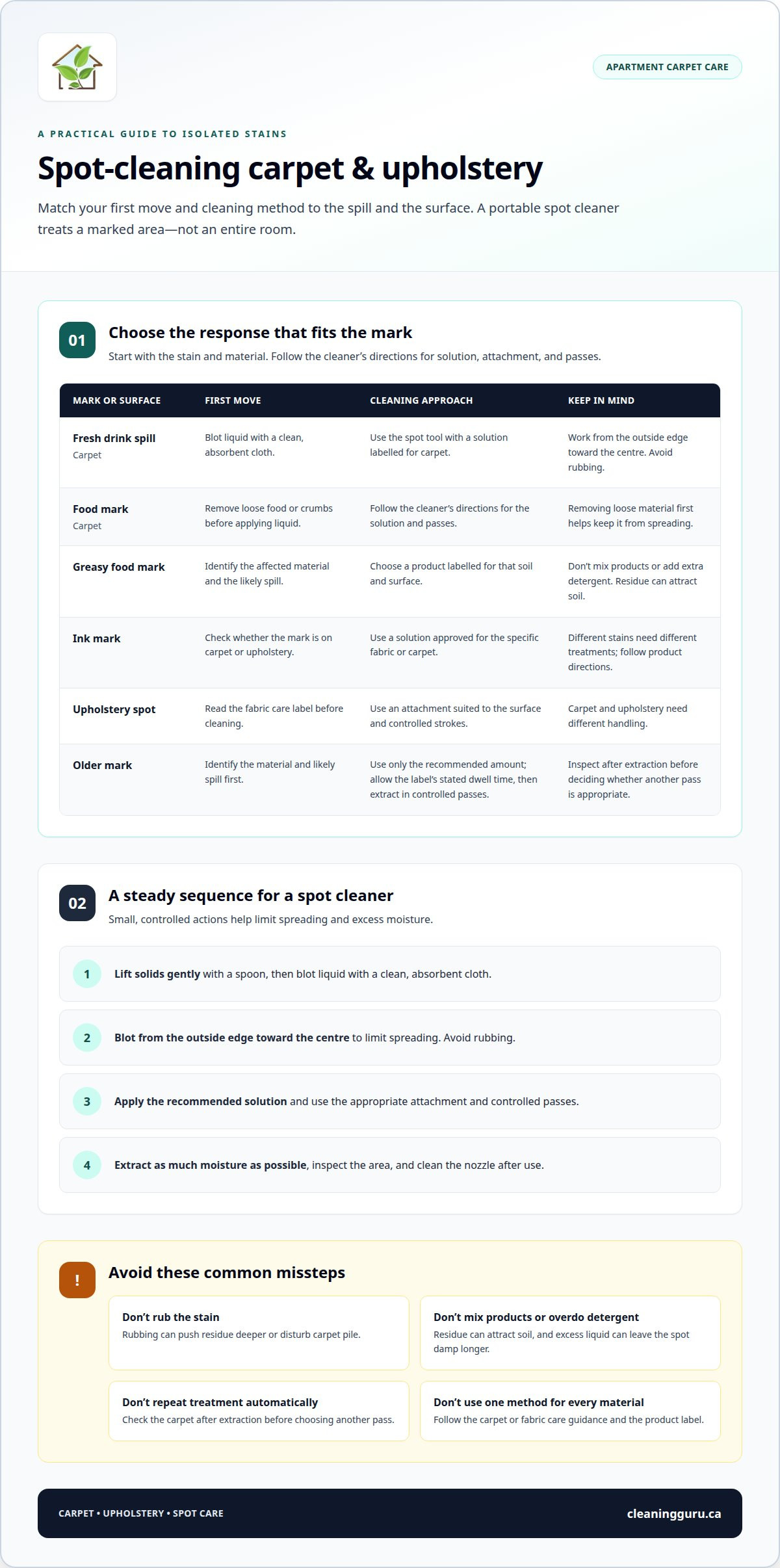
Carpet and upholstery spot cleaners
A portable spot cleaner treats a spill or marked area rather than an entire room. It sprays solution onto the affected fibres, then draws loosened soil and moisture into its recovery tank. For a coffee spill on carpet, this focused process can clean the spot without moving furniture across the apartment.
Start with the stain, not the machine. Gently lift solids with a spoon, then blot liquid with a clean, absorbent cloth. Work from the outside edge toward the centre to limit spreading. Avoid rubbing, which can push residue deeper or disturb carpet pile. Follow the cleaner’s directions for solution, attachment, and passes, and remove as much moisture as possible.
- Fresh drink spills: Blot first, then use the spot tool with a carpet-compatible solution.
- Food marks: Remove loose material before applying liquid, so crumbs don’t spread.
- Upholstery spots: Follow the fabric care label and use an attachment suited to the surface.
Different stains need different treatments. A greasy food mark calls for a product labelled for that soil, while an ink mark needs a solution approved for the fabric or carpet. Don’t mix cleaning products or add extra detergent to a machine. Residue can attract soil, and excess liquid can leave the spot damp longer.
For an older mark, identify the affected material and likely spill first. Apply only the recommended amount of solution, allow the label’s stated dwell time, then extract in controlled passes. Repeating treatment without checking the carpet can spread the stain or leave residue. Inspect the area after extraction before deciding whether another pass is appropriate.
Portable spot cleaners suit isolated marks on carpet, stairs, or upholstery. Broad, heavily soiled areas need a different approach from a small spill. Keep the tool moving, empty the recovery tank as directed, and clean the nozzle after use. This helps prevent collected soil from transferring during the next spot treatment.
How much do portable carpet cleaners cost in Canada?
A portable machine’s purchase cost depends on its intended workload and features. Compare a compact spot cleaner with a larger unit designed for repeated room cleaning. Tank capacity, hose reach, upholstery attachments, suction specifications, and warranty terms can all affect the price. A machine with a dedicated upholstery tool may suit carpet spots and fabric furniture, while a simpler model may focus on small spills.
Look beyond the shelf price. Cleaning solution, replacement filters, storage, and maintenance can add to the cost of owning equipment. Check what comes in the box and whether the manufacturer recommends particular products or replacement parts. A smaller apartment may need less capacity, but frequent spills or several carpeted rooms make durability and tank size more relevant.
- For occasional spots: Compare compact models and the attachments included.
- For several rooms: Consider tank capacity, hose reach, and ease of moving equipment.
- For upholstery: Check whether the machine includes a suitable fabric-cleaning attachment.
Professional cleaning costs differ from buying a machine. The estimate depends on the areas being cleaned, the amount of carpet, its condition, the type of soil, and whether upholstery is included. A small isolated stain and several carpeted rooms are different jobs. Cleaning Guru provides free estimates based on the work involved.
To make an estimate more useful, describe the rooms or furniture involved, the visible stains, and any access details that affect equipment movement. This helps define the work before the appointment. If professional cleaning fits your needs, request a free estimate for your cleaning needs.
Cleaning Guru Carpet and Home Cleaning
Cleaning Guru Carpet and Home Cleaning uses portable equipment for residential and commercial carpet cleaning, as well as upholstery cleaning in Calgary. Portable equipment can reach places truck-mounted systems cannot, making it a practical option for apartment residents. Carpet and fabric furniture can be included in the same service discussion.
Consider professional cleaning when carpet needs more than a small spot treatment, or when a sofa or upholstered chair also needs attention. Share which rooms or furnishings need cleaning and describe visible soil or stains. These details help clarify the work involved and support a more relevant estimate.
Plan your next cleaning step with confidence
If you’re weighing a portable equipment carpet cleaner for apartments against a professional visit, consider the scope of the job. A few fresh spots may call for targeted treatment, while carpet across several rooms or upholstery that also needs attention may make a broader cleaning plan more practical. Choose an approach that fits the surfaces and the work involved.
Before arranging service, make a short note of the rooms or furnishings, the stains you’ve noticed, and any building access details that could affect equipment movement. Sharing those specifics gives the conversation a useful starting point and helps define what you want cleaned. You can then decide on a next step with a clearer sense of the work.
For help planning apartment carpet or upholstery cleaning, contact Cleaning Guru Carpet and Home Cleaning. A straightforward conversation can help you move from deciding to taking action, at a pace that works for you.
Frequently Asked Questions
What is the Process for Portable Steam Cleaning?
Portable hot-water extraction applies cleaning solution, loosens soil, then removes liquid through suction. The operator prepares the machine, treats carpet in sections, and makes extraction passes to lift moisture and loosened debris. “Steam cleaning” is a common label, but the process may use hot water rather than steam. Follow the equipment instructions and carpet-care guidance throughout the job.
When is a Portable Unit Required?
Portable equipment is useful when it needs to be brought into an upper-floor apartment or through a building with limited access. It can also suit a focused job, such as cleaning a carpeted bedroom without treating every room. In Calgary apartments, the route through entrances, elevators, and hallways can help determine which equipment is practical.
What types of portable carpet cleaners work best in apartments?
The right fit depends on whether you need to clean small spills or larger carpeted areas. A spot-cleaning machine is intended for localized marks, while an extractor designed for room cleaning suits broader carpet areas. If you also have upholstered furniture to clean, check whether the machine supports those fabric surfaces. Match the equipment to the job, not just its size.
How much water and cleaning solution do portable carpet cleaners use?
The amount of solution depends on the machine’s tank capacity, the area being cleaned, and the dilution directions. Fill the clean-water tank only to its marked line, and measure concentrate as the label directs. A small spot treatment needs less liquid than a whole room. Avoid adding extra solution to speed cleaning, since residue can remain in carpet fibres.
How do you use a portable carpet cleaner on apartment carpets and area rugs?
First, check the carpet or rug care instructions and clear loose debris. Prepare the machine as directed, then test the solution on a hidden area. Clean in manageable sections, avoid over-wetting, and use suction passes to collect moisture. For an area rug, check its backing and fibre guidance before applying water. Stop if the test changes its colour or texture.


