

The safest way to clean velvet often uses less moisture, not more. Brush the pile weekly with a soft brush, vacuum gently with a brush attachment, and blot spills instead of rubbing them. A velvet furniture cleaning professional can help with stubborn stains or fabric that needs careful treatment.
It’s understandable to worry that a small spill or an enthusiastic scrub could flatten the pile or leave the colour uneven. Gentle, fabric-aware care helps keep velvet looking neat without overworking it.
Learn how to brush and vacuum velvet, use cleaner sparingly, and handle common stains. You’ll also find signs that it may be time for professional upholstery cleaning, especially when the care code or stain makes home treatment risky.
Key Takeaways
- Brush velvet weekly with a soft-bristle brush, following the pile to lift dust and help restore its direction.
- Vacuum gently with a soft brush attachment; avoid a beater bar or forceful strokes that can disturb the pile.
- Read the care-code tag before using any cleaner, and apply as little moisture and detergent as the fabric allows.
- Blot spills with a clean, dry cloth instead of rubbing, which can push stains deeper and flatten the fabric.
- Consider professional upholstery cleaning for prominent stains, heavy soil or delicate velvet that needs careful handling.
Brushing velvet pile
Use a soft-bristle brush to lift surface dust and guide velvet fibres back into place. Brush gently in the direction of the pile, and let damp velvet air-dry before restoring its texture.
- Brush velvet upholstery weekly with light strokes that follow the pile. This lifts surface dust and helps prevent compressed fibres from making one area look dull beside another. Check the direction first: sweep a small section and compare its sheen with the surrounding fabric. If the colour looks darker or lighter, the fibres may be lying in a different direction. Adjust your strokes rather than pressing harder.
-
Brush Matted Pile to Restore Its Shape
Gently brush a matted area with a soft-bristle velvet or clothing brush, moving in the direction of the pile. Keep strokes short and careful, especially on seat edges or cushions where regular use can compress fibres. Check the texture after a few passes; stop if fibres snag or the surface sheds. More pressure won’t reliably lift the pile and may cause damage.
- Let any treated or damp area air-dry before brushing it. Velvet should dry quickly, but avoid direct or high heat because it can damage synthetic fibres or singe natural velvet. A fan can help move air around the fabric; keep it at a distance and use room-temperature airflow. Don’t brush while the pile is wet, since damp fibres can shift and dry in an uneven direction.
-
Brush the Pile After Cleaning
Wait until the cleaned area is completely dry, then use a soft, dry brush to reset the pile. Gently brush against the grain, then follow it to lift and align the fibres. Check the sheen from different angles, since pile direction affects how light reflects from velvet upholstery. Avoid repeated, forceful strokes over the same spot.
- Restore the surrounding texture with light, even strokes instead of brushing only the visible mark. If the centre of a cushion looks flattened after cleaning, for example, brush from the centre towards the edges, then finish in the pile’s natural direction. Performance velvet still needs gentle handling; the name doesn’t mean it can withstand harsh brushing or high heat. Stop when the pile lies evenly.
Vacuuming velvet upholstery
When looking for a velvet furniture cleaner in Canada, choose an upholstery cleaner experienced with velvet and fabric-specific care. In Calgary, prioritize a service that considers the furniture’s care code and fibre before cleaning.
DIY cleaning can flatten or shed the pile, discolour the fabric, or drive moisture into the backing. Cotton and polyester velvet may be cleaned carefully at home, but delicate fibres such as silk, rayon, and acetate are easily damaged.
Before professional cleaning, remove loose cushions and personal items, then note visible stains and the furniture’s care-code tag. A clear view of the fabric and stain locations helps guide the cleaning approach.
- Vacuum velvet upholstery regularly with a soft-bristle attachment or handheld vacuum brush. Move gently in the direction of the pile, using light suction and short strokes. A beater-bar attachment can catch fibres, while forceful suction or repeated abrasion can remove pile. Work across the seat, back, cushion seams, and creases where dust settles.
- Vacuum a stained area before applying liquid or upholstery cleaner. This removes loose grit that could scratch or grind into the fabric while blotting. For example, clear crumbs from a cushion before treating a food mark. Keep the vacuum head level, and don’t press down to force particles from the pile.
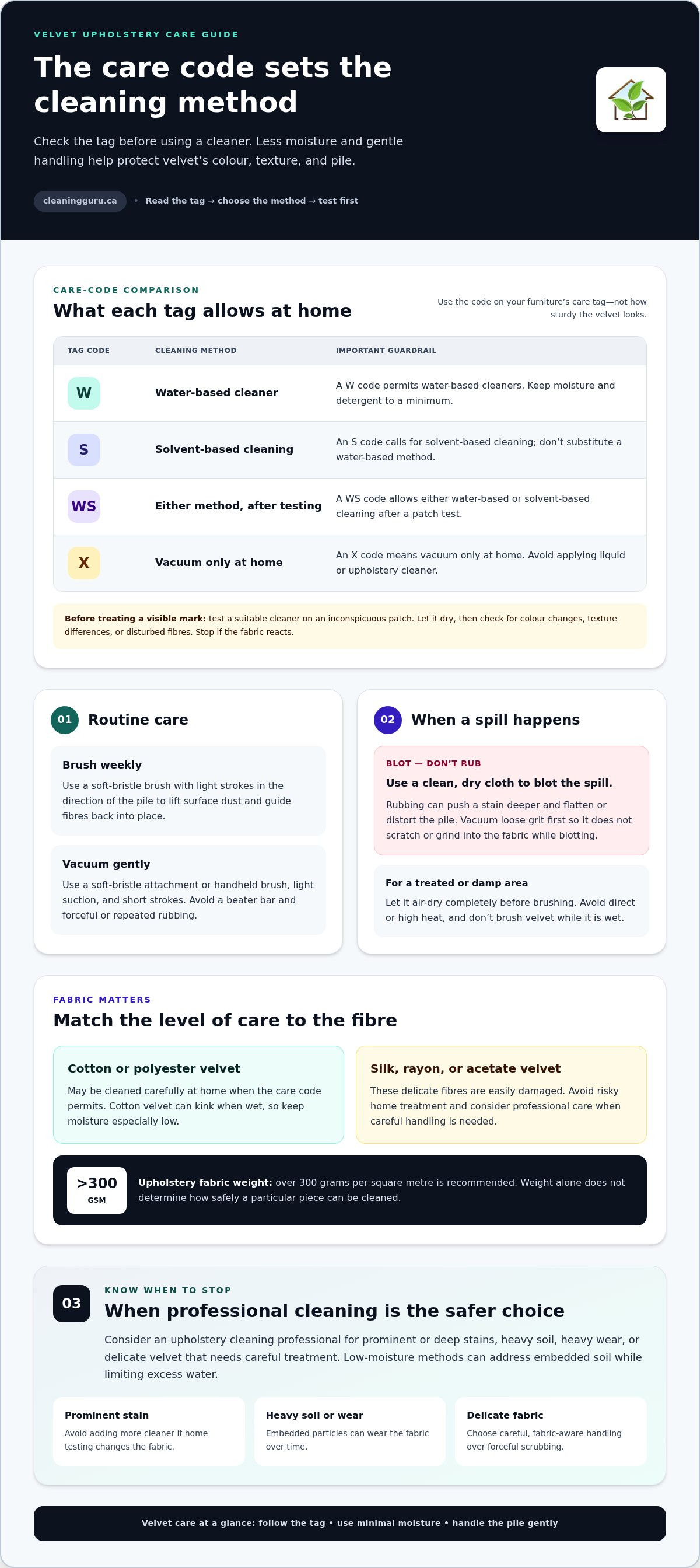
- Check the care-code tag before choosing a cleaner for cotton or polyester velvet. A W code permits water-based cleaners, S calls for solvent-based cleaning, WS allows either method after testing, and X means vacuum only at home. Don’t treat every velvet fabric as washable, even if its surface looks sturdy.
- Test a suitable upholstery cleaner on an inconspicuous patch before treating the visible area. Let the test spot dry, then check for colour changes, texture differences, or disturbed fibres. If the fabric reacts, stop rather than expanding the test. Don’t scrub: rubbing can push soil deeper and distort the pile.
- Choose professional cleaning for deep stains, heavy wear, or fabric that needs more careful treatment. Low-moisture methods can address embedded soil while limiting excess water on velvet upholstery. If the stain is prominent or home testing changes the fabric, consider professional upholstery cleaning instead of applying more cleaner.
Dust and particles can settle deep in velvet fibres over time. If left embedded, they can wear the fabric until the backing is exposed.
Using minimal detergent to protect colour and fabric
Check the velvet’s care code before applying cleaner, and use only a small amount that suits the code. Too much moisture or detergent can alter the colour, texture, or pile.
Help prevent stains by keeping food and drinks away from velvet upholstery and dealing with spills promptly. Regular gentle care and a cleaner suited to the fabric’s care code can help avoid unnecessary wetting.
-
Consider the Fabric and Its Construction
Identify the fibre content before choosing a cleaning method. Velvet has two fabric layers joined by vertical warp yarn, with a cut-fibre pile that can shift or shed under rough treatment. Cotton velvet can kink when wet, so keep moisture especially low. For upholstery, fabric weight over 300 grams per square metre (GSM) is recommended; weight alone doesn’t determine how safely a particular piece can be cleaned.
-
Use Minimal Detergent
Choose a mild, pH-neutral upholstery cleaner formulated for the velvet’s care code, and use as little as possible. Start with a small amount on a soft sponge rather than soaking the fabric. Work gently on the affected area without spreading cleaner across the whole cushion. Harsh chemicals and bleach can damage fibres or change the colour, so keep them away from velvet.
- Read the care-code tag before using water or solvent. A W label means water-based cleaners only; an S label means solvent-based cleaners only. WS allows either approach, but test it first on a hidden area. X means vacuum only at home, with professional cleaning for stains. Don’t assume a velvet sofa can tolerate water because its surface looks robust.
- Assess performance or stain-resistant fabric by its label, not by appearance. Those descriptions don’t override the care code or make harsh scrubbing safe. Even performance velvet needs gentle treatment to protect the pile and colour. Fabric ratings can exceed 100,000 double rubs, but that abrasion measure doesn’t determine which cleaner or moisture level is appropriate.
- Use the fabric’s construction and intended use as context, not as permission to apply more detergent. Performance velvet can provide 15-20 years of residential or commercial use before visible wear appears. That lifespan doesn’t mean every piece will resist stains equally. Follow the tag, test the cleaner, and avoid excess moisture to limit unnecessary stress on the fibres.
Handling food, grease, pet, ink, and water stains
- Blot a fresh spill immediately with a clean, dry, absorbent cloth. Press straight down to lift liquid from velvet cushions, using a clean part of the cloth as it absorbs moisture. Don’t rub or scrub. These motions can push food, pet mess, or coloured liquid deeper into the backing and distort the pile.
- Gently remove solid food from the surface before treating the mark. Lift pieces with a clean spoon or the edge of a card, working from the outside towards the centre. Avoid scraping the fibres. For greasy or oily food, don’t add water or household degreaser without checking the care code; the wrong treatment can spread residue or affect the fabric.
- Check the care-code tag before using any stain treatment. Use distilled water sparingly only on W- or WS-coded velvet, and test a hidden spot first. If water doesn’t lift the mark, a mild upholstery cleaner suited to the fabric’s code may help. Ink and pet stains can leave visible marks or odours, so avoid layering several cleaners over them.
- For velvet labelled S, use only a compatible solvent-based cleaner. Apply dry-cleaning detergent to a sponge, then blot the stain repeatedly without rubbing the pile. Let the cleaner dry completely on the fabric, following its directions. Don’t use this method on water-only velvet, and stop if a test patch changes colour or texture.
- Use steam to ease creases, not to remove stains. Light steaming can reduce creases, but direct or high heat can damage synthetic fibres or singe natural velvet. Steam won’t replace careful stain treatment or remove embedded dust. For deep or prominent stains, professional cleaning can use low-moisture methods suited to velvet upholstery.
- After blotting or treating a mark, let the area air-dry fully. Keep cushions apart so air can circulate, and don’t use heat to speed drying. Once dry, inspect the spot from different angles; velvet’s pile changes its appearance with direction. If residue remains, avoid repeated home treatments that add liquid or disturb the surface.
For a fresh liquid spill, lift the excess with a clean paper towel or cloth before treating the stain. Make sure the cloth is free of food or debris so it won’t transfer anything to the fabric. Blot gently: rubbing velvet upholstery can push a stain deeper into the backing and distort the pile. If residue remains after the initial absorption, choose a treatment suited to the fabric’s care code rather than scrubbing the mark.
If water doesn’t remove the spill, use a mild fabric cleaner designed for upholstery. You can also blot a velvet stain with a cloth dipped in sudsy dish-soap water, but follow the fabric’s care guidance and test a hidden spot first. If using dry-cleaning detergent, let it dry completely on the fabric. Allow the treated area to dry fully before checking whether the mark remains, and don’t rub the pile. If the stain persists, avoid adding more products or disturbing the velvet surface.
Professional technicians and velvet-cleaning experience
Before hiring an upholstery cleaning service, ask how its technicians identify velvet’s fibre content, read its care code, and choose a suitable method. Ask how they limit moisture and protect the pile while treating stains or embedded soil.
- Share the fabric label and describe the piece before cleaning begins. A velvet sofa may contain cotton, polyester, silk, rayon, or acetate, and these fibres don’t all tolerate the same treatment. Point out the care-code tag, visible spills, and any marks from past cleaning. These details help the technician match the method to the upholstery.
- Ask how the cleaning plan accounts for the care code and fibre content. A velvet furniture cleaning professional should distinguish between water-based, solvent-based, and vacuum-only care rather than treating every fabric alike. Cotton velvet, for example, may kink when wet, while delicate silk velvet can be easily damaged. The fabric label helps guide the decision.
- Discuss moisture control before deep cleaning. Low-moisture methods can help professionals address embedded soil and allergens while limiting water exposure. Ask what approach they plan to use and how they’ll avoid overwetting the pile. A clear explanation should connect the method to the fabric and care code, not just the stain.
- Describe each stain and where it appears. Food, grease, pet marks, and ink can respond differently, and an old spill may have reached the backing. Ask how the technician plans to treat the affected area and protect surrounding fibres. Mention any products used previously, as cleaner residue can affect how a new treatment works.
- Ask what tools will be used on the velvet and how the technician will handle its texture. A soft-bristle attachment and gentle technique matter; aggressive agitation or excessive suction can remove pile. Ask whether the surface will be tested in an inconspicuous area first. This can reveal colour changes or fibre reactions before treatment proceeds.
- Consider how the piece is used when planning professional care. Velvet furniture is often deep-cleaned every year or two, while heavily used pieces may need professional upholstery cleaning once a year. Pets, children, frequent seating, and visible embedded soil can make regular attention more useful than waiting for a prominent stain.
- Prepare the area by removing loose cushions and personal items, then identify stains clearly. This gives the technician access to seams and surfaces and helps keep the cleaning focused. For help with upholstery care, arrange professional cleaning support for your velvet furniture.
Cleaning Guru Carpet and Home Cleaning: Residential Carpet Cleaning
Cleaning Guru Carpet and Home Cleaning provides Residential Carpet Cleaning and Upholstery Cleaning for homes that need professional care. If your velvet furniture has a persistent stain, embedded soil, or needs attention beyond routine brushing, professional upholstery cleaning may be a useful next step. Share the fabric’s care code and point out stained areas so the cleaning approach can account for the material. Residential carpet cleaning can also refresh carpets alongside upholstered furniture, and Commercial Carpet Cleaning is available for business spaces.
For help with upholstery or carpets, contact Cleaning Guru Carpet and Home Cleaning.
Give Your Velvet a Careful Next Step
Velvet’s appearance depends on more than removing a mark. Its fibres, backing, and pile all affect how it responds to cleaning. If a piece has persistent staining or looks uneven after home care, pause before applying another product. A velvet furniture cleaning professional can assess the fabric and help determine a suitable next step.
Cleaning Guru Carpet and Home Cleaning provides upholstery cleaning for furniture that needs professional attention. Share the care-code tag and clearly describe the affected areas. This gives the cleaning team useful context about the material and your concerns, without adding more moisture or product yourself.
Choose the level of care that suits the furniture, whether that means continuing gentle upkeep or arranging professional support. For a friendly conversation about upholstery cleaning, contact Cleaning Guru Carpet and Home Cleaning. With a careful approach, you can make a thoughtful plan for keeping your velvet furniture looking its best.
Frequently Asked Questions
How do professional cleaners clean velvet furniture?
Professional cleaners assess the fabric and care label before choosing a cleaning method. They may vacuum loose soil, treat specific marks, and use low-moisture techniques to address embedded dirt while limiting excess wetting. For example, a technician can plan differently for water-sensitive velvet than for water-cleanable fabric. The method should suit the upholstery’s fibres and construction, rather than relying on one approach for every piece.
What cleaning methods are safe for different types of velvet upholstery?
The care code guides which cleaning methods are suitable. W indicates water-based cleaners, S indicates solvent-based cleaners, WS permits either after testing, and X means vacuuming only at home. Silk, rayon, and acetate velvet are particularly sensitive, so professional treatment is preferable to experimenting with household products. Cotton or polyester velvet may tolerate careful home cleaning, but test the product discreetly first.
How can I identify the velvet fabric type and cleaning code on furniture?
Look for a sewn care label beneath removable cushions, along the underside of the frame, or under the seat. It may show a W, S, WS, or X code and sometimes list the fibre content, such as cotton or polyester. If the tag is missing, check the furniture’s care paperwork or manufacturer label. A close-up photo of the label can help a cleaner understand the material before assessing the piece.
What stains can professional velvet furniture cleaning remove?
Professional cleaners can treat marks from food, grease, pets, ink, and water using a method suited to the velvet’s care code and fibre content. The stain’s age, size, and previous treatment affect how it responds. Tell the cleaner if, for example, a pet stain was treated with a household product, since residue can influence the next step. Describe each mark clearly rather than grouping different stains together.
How long does professional velvet furniture cleaning take to dry?
Drying time depends on the amount of moisture used, the fabric’s construction, and airflow around the furniture. A low-moisture method limits water left in the pile, while a fan can help circulate air. Keep cushions separated and ventilate the room as the fabric dries. Avoid direct sunlight, hair dryers, and high heat, which can fade colour or harm fibres. Wait until the velvet feels fully dry before using or brushing it.


