

A stain that can be treated may not disappear completely. A recliner chair deep cleaning service can address many stains, but worn fabric and permanent discolouration may remain visible. The right approach depends on the upholstery and the chair’s construction.
It’s understandable to worry that deep cleaning could affect delicate fabric or leave a recliner damp. A careful process starts by assessing the material and stain, then matching the treatment to the chair instead of using one method for every surface.
Here, you’ll learn what affects stain removal, how fabric and moving parts guide cleaning, and what to expect from hot water extraction, dry-solvent methods and drying. You’ll also see when a recliner’s footrest and removable cushions can be cleaned, and how professional upholstery cleaning can help refresh a well-used chair.
Key Takeaways
- Reachable upholstered footrests can be cleaned after the chair’s moving parts are assessed, including powered mechanisms.
- Fabric and construction guide the cleaning method; leather and velvet need specialized treatment.
- Hot water extraction and dry-solvent cleaning suit different upholstery needs, so the right approach depends on the material and the type of soil.
- Most stains can be treated, but worn fabric and permanent discolouration may remain visible.
- Plan to leave a freshly cleaned chair unused until its fabric is fully dry.
Can you clean the footrest on a recliner?
An upholstered recliner footrest can be cleaned when its fabric is accessible and its moving parts can be assessed safely. A recliner chair deep cleaning service typically involves inspecting the upholstery, noting visible stains, and choosing a treatment suited to the material. Accessible upholstered panels and removable cushions may also be cleaned when appropriate. The aim is to clean the fabric without soaking mechanical components.
Before treatment, extend the footrest and inspect its seams, hinges, and powered controls. Keep cleaning solution and moisture away from motors, wiring, switches, and exposed metal. The cleaner can assess the footrest’s movement and clean its upholstered surface while taking care around the mechanism. If the footrest is enclosed or difficult to reach, cleaning can focus on accessible fabric.
For upholstery cleaning in Calgary, portable equipment can be brought into a home or office, including spaces that truck-mounted systems cannot reach. Clear a path to the recliner and leave enough room to extend the footrest fully. In an office, upholstered task chairs, waiting-room seating, and conference-room chairs can also be assessed. Grouping similar items can help organize the work, but each fabric still needs suitable treatment.
When assessing a cleaning company in Canada, compare its business name across its website, written estimate, and review profiles. Look for detailed comments about recliners, stain treatment, care around moving parts, and communication. Specific, consistent feedback is more informative than a single general rating. Make sure the upholstery service described matches the chair cleaning you need.
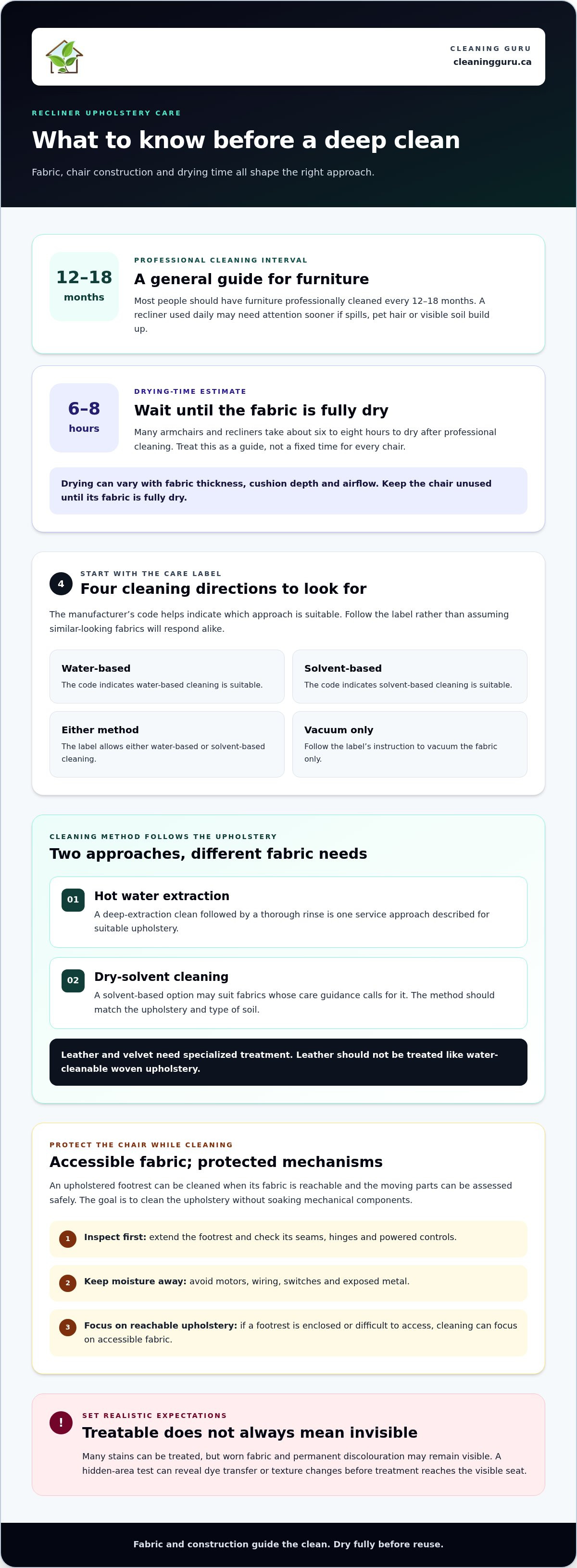
Most people should have furniture professionally cleaned every 12-18 months. A recliner used daily may need attention sooner if food spills, pet hair, or visible soil build up. Check the seat creases and footrest regularly; embedded soil and fresh spills call for different cleaning steps. Routine vacuuming with an upholstery attachment can remove loose debris between professional cleanings.
Promotional upholstery-cleaning prices can depend on what the offer includes, such as the number of items or particular treatments. Compare the written inclusions, not just the discount wording. The estimate depends on the chair, its fabric and construction, the soil, and the treatment required. A clear estimate explains what the offer covers before you book.
Depending on the upholstery, services may pre-treat the fabric, remove spots, use steam or dry cleaning, and deodorize it. Cleaning Guru Carpet and Home Cleaning offers deodorizing and sanitizing suited to the upholstery material, treats stains where needed, and performs deep extraction cleaning followed by a thorough rinse. It uses air movers while working to help upholstery dry.
The chair’s fabric and condition determine which treatment is appropriate.
Cleaning methods chosen for furniture fabric and construction
A recliner’s fabric, seams, and frame determine which cleaning method is suitable. Check the care label and inspect worn areas before treatment.
Fabric Assessment and Cleaning Codes
Start with the manufacturer’s care label, often attached beneath a seat cushion or frame. Its code indicates whether the fabric is suitable for water-based cleaning, solvent-based cleaning, either method, or vacuuming only. Follow the label rather than assuming similar-looking fabrics will respond alike. A woven polyester chair and a velvet recliner, for example, need separate assessments.
Cleaners also assess colour, seams, backing, and existing wear. Testing a hidden area can reveal dye transfer or texture changes before treatment reaches the visible seat. Leather and velvet need care suited to their surfaces. Leather should not be treated like woven upholstery.
How do cleaners deep clean leather recliners safely? They assess the leather’s finish and condition, then choose a treatment suited to the surface. They avoid treating leather like water-cleanable fabric, which can leave it dull or marked.
Recliner Preparation and Component Protection
Before cleaning, remove loose items from the pockets and clear space around the chair. Extend the footrest and point out the power cord, switches, and visible wiring. Identify stains, repaired seams, and worn colour. This helps the cleaner assess the chair’s construction and keep equipment away from electrical parts.
Can recliner cleaning damage upholstery, mechanisms, or electrical components? It can. Excess moisture, an unsuitable solvent, or solution entering a motor or switch can cause damage. Matching the treatment to the fabric and protecting electrical parts helps reduce that risk.
Use these practical preparation steps:
- Vacuum crumbs and loose soil from the seat creases with an upholstery attachment.
- Move a side table or lamp so the chair’s arms and footrest are accessible.
- Keep pets, blankets, and personal items away from the work area.
- Show the cleaner the care label and point out any stain history you know.
Avoid applying a household spot remover before professional treatment. Products can react with cleaning solutions or leave residue that changes how a stain responds. Rubbing a spill, for example, can push soil deeper into the fabric and roughen its surface. Gently blot fresh liquid with a clean cloth, then leave the area untreated.
For a fabric-specific approach, explore upholstery cleaning information before arranging professional care. A clear label, accessible chair, and list of problem areas help make the cleaning plan more precise.
Drying and moisture concerns
Many armchairs and recliners take about six to eight hours to dry after professional cleaning. Keep the chair unused until the fabric is fully dry.
Drying Time Before Reuse
That six-to-eight-hour estimate is a guide, not a fixed drying time for every chair. Fabric thickness, cushion depth, airflow, and the amount of moisture used all affect drying. Dense padding can feel dry on the surface while remaining damp inside. Check the seat, armrests, and footrest before sitting down again.
Keep upholstered furniture unused until it is completely dry to avoid pressing damp fabric or cushions out of shape. Leave the footrest open if that exposes more fabric to room air. Don’t cover the chair with a blanket or place cushions against damp surfaces. A clean, dry towel can help assess surface moisture, but it cannot confirm that the cushion interior is dry.
Quick-Drying Considerations
Quick drying depends on airflow as well as extraction. Air movers can help circulate air around upholstery during cleaning. In a Calgary home, leave clear space around the chair and keep air moving through the room. Don’t direct intense heat at the fabric; uneven heating can affect delicate surfaces.
Faster drying should not come at the cost of leaving excess moisture behind. A thorough rinse and effective extraction help remove cleaning solution and moisture from fabric. If a cushion still feels cool or damp, give it more time before use. Check seams and creases, where layers of fabric may hold moisture longer than an exposed seat.
Moisture can also affect how a chair feels after cleaning. Sitting on damp upholstery may flatten the pile or transfer moisture to clothing. On a powered recliner, keep the motor, switches, and electrical connections dry. If moisture reaches a control area, don’t operate the chair until it is dry.
Use these steps after cleaning:
- Leave the recliner open and unused until all fabric feels dry.
- Keep air circulating around the seat, arms, and extended footrest.
- Check cushion seams and creases, not just the visible surface.
- Wait longer if the chair still feels cool or damp to the touch.
Room conditions matter. Still air in a closed room slows evaporation, while open space and moving air support drying. If Calgary’s outdoor air is damp, ventilate sensibly and maintain indoor airflow rather than assuming an open window will speed the process. Follow the after-care directions for the fabric and treatment used.
Plan around the full drying period rather than expecting a quick turnaround. For example, arrange cleaning before an evening when you won’t need the recliner. This gives the fabric time to dry and lets you inspect the seat, seams, and footrest before using the chair again.
Hot water extraction and dry-solvent cleaning
For fabric recliners, cleaners assess the upholstery before selecting extraction or solvent treatment. The process can include stain treatment, deep extraction, and a thorough rinse.
Hot Water Extraction and Rinsing
Hot-water extraction applies cleaning solution to suitable fabric, then removes soil and moisture with portable extraction equipment. Stains can be treated first, followed by deep extraction and a thorough rinse. The rinse helps remove loosened residue, and extraction removes much of the moisture. The fabric’s care instructions and condition determine whether this method is suitable.
Hot-water extraction is not simply spraying a chair with steam. Cleaning methods vary, so it’s useful to understand what a process involves. With extraction, solution is applied in a controlled way and removed with suction. On a recliner, the method also needs to account for seams, cushion construction, and nearby mechanisms.
Fabric Recliner Cleaning Steps
To deep clean a fabric recliner, cleaners first inspect the care label and note visible stains. They then treat suitable spots, clean the upholstery using the selected method, and extract the cleaning solution. Removable cushions may be treated on both sides when appropriate. A final inspection helps identify remaining marks or areas that need more attention.
Dry-solvent cleaning uses a solvent-based approach rather than water-based extraction. It may suit some fabrics that are sensitive to water, but the care code and fabric condition should guide the choice. Solvent treatment is not automatically right for every delicate chair. Velvet, for instance, needs special care, and a hidden-area test can help reveal colour or texture changes.
Hot carbonating extraction is another named cleaning approach. It uses carbonated cleaning solution and extraction, but still needs to suit the recliner’s fabric. The name alone does not determine whether it is appropriate. Consider how the process handles cushion seams and removes cleaning solution from the upholstery.
Carpets and recliners both need soil removal, but their construction differs. A chair has shaped cushions, vertical arms, seams, and often a moving footrest. A method designed for a broad carpeted floor may not suit every part of a recliner. Focus on fabric compatibility and controlled application, not just the equipment name.
Before cleaning, point out old stains, worn patches, and repaired seams. Permanent discolouration or fabric wear can remain visible after treatment. Extraction can remove soil, but it cannot restore lost colour or repair damaged fibres. This distinction sets realistic expectations and keeps the focus on cleaning the upholstery safely.
Recliner and chair cleaning
A recliner collects soil on its seat, armrests, seams, and footrest. Cleaning each area matters because creases in the chair’s shape can hide soil that surface wiping misses. A careful service assesses the fabric, visible marks, cushion construction, and accessible surfaces before selecting treatment.
Stain removal has limits. Many stains can be treated, but worn fabric and permanent discolouration may remain visible. Cleaning can remove residue from a drink spill, for example, but cannot replace colour lost through abrasion or fading. Tell the cleaner what caused a stain, if you know. A fresh spill and an old, previously treated mark may need different approaches.
Removable cushions may be cleaned on both sides when suitable. This can address soil on the underside, where crumbs and dust collect. Don’t assume every cushion should be turned or treated the same way. Check how it fits the chair and whether its fabric matches the fixed upholstery. Each piece can be assessed individually rather than treated with one method.
Deodorizing and sanitizing treatments should suit the upholstery material. These are separate from stain removal: deodorizing addresses odours, while sanitizing is a treatment chosen for the fabric. A cleaner assesses the chair first, then selects compatible care. For example, a food odour may remain in cushion fabric even after visible residue is removed, so cleaning needs to address the affected area.
A thorough chair cleaning generally follows a clear sequence:
- Inspect the fabric, seams, cushions, footrest, and visible stains.
- Vacuum loose soil from creases and upholstery surfaces.
- Treat spots using an approach suited to the material.
- Clean accessible fabric and removable cushions as appropriate.
- Review the result and allow the chair to dry fully.
Cleaning the chair can refresh more than the seat. Armrests may show hand oils, while the footrest collects soil from shoes and clothing. Pay attention to high-use areas, but don’t scrub aggressively. Rubbing can roughen fibres or spread a stain. For a fresh spill, gently blot with a clean cloth.
Before booking a recliner chair deep cleaning service, find the care label and point out stains, odours, and worn patches. This helps the cleaner assess what needs treatment and explain what cleaning can address. A clean chair can feel fresher, but cleaning cannot remove permanent colour loss or fabric wear.
Cleaning Guru Carpet and Home Cleaning: Residential Carpet Cleaning
Cleaning Guru Carpet and Home Cleaning provides upholstery cleaning for Calgary homes, including recliners that need attention. It’s a practical option when spills, embedded soil, or regular use have left fabric needing professional care. Treatment depends on the chair’s material, construction, and condition, so share those details when requesting a free estimate.
For a broader home refresh, Cleaning Guru also provides residential carpet cleaning in Calgary. Cleaning both carpets and upholstered furniture can address soil across commonly used living spaces. Commercial carpet cleaning is also available for business environments.
If your recliner or carpets need professional care, contact Cleaning Guru Carpet and Home Cleaning to request a free estimate.
Make a Clear Plan for Your Recliner
Before arranging a recliner chair deep cleaning service, decide what you want the cleaning to address. You may be focused on a visible mark, an overall refresh, or routine care for a frequently used chair. Naming your priority helps keep the discussion focused on your needs and the areas that matter most.
Consider how the recliner fits into your home, too. If you use it every evening, plan for a time when you can leave it unused after cleaning. If it’s in a shared living space, consider how its care fits with other household cleaning plans. A practical plan makes the next step easier to organize.
Cleaning Guru Carpet and Home Cleaning offers upholstery cleaning, along with residential and commercial carpet cleaning. For help planning care for your recliner, contact Cleaning Guru Carpet and Home Cleaning.
A thoughtful cleaning plan helps you care for the chair and keep your living space comfortable.
Frequently Asked Questions
Can every stain be removed?
No. Professional cleaning can treat many stains, but marks may remain because of fabric wear, colour loss, or permanent discolouration. Tell the cleaner what caused the stain and whether you’ve already used a spot remover. For example, the cleaner can account for residue from a household product when selecting treatment. Blot fresh spills rather than rubbing, which can spread soil or disturb fabric fibres.
How can I get a quote?
Contact Cleaning Guru Carpet and Home Cleaning to request a free estimate for upholstery cleaning in Calgary. Share the chair type, its fabric care label, visible stains, and whether the cushions are removable. Mention a powered recliner or damaged seam so the team can understand its construction and cleaning needs. Clear details help them assess the work before providing an estimate.
How long before I can use it again?
Wait until the upholstery is fully dry before using the recliner. Drying time depends on fabric thickness, cushion construction, moisture, and airflow, so check the seat, seams, and armrests rather than judging by the surface alone. A deep cushion, for example, can retain moisture after its outer fabric feels dry. Keep the chair uncovered and allow air to circulate as it dries.
How much does professional recliner chair cleaning cost in Canada?
The estimate depends on the chair’s size and construction, fabric type, soil level, stains, and required treatment. For a useful estimate, describe whether the recliner has removable cushions, visible marks, or delicate upholstery. Cleaning Guru Carpet and Home Cleaning provides free estimates for its Calgary services, so include those details when requesting one.
What stains and odours can professional recliner cleaning remove?
Professional upholstery cleaning can address many common marks, including food and drink spills, as well as odours. The cleaner selects stain treatment and deodorizing to suit the material. A coffee mark, for example, needs a different assessment from a lingering food odour. Cleaning removes soil and residue, but cannot restore colour lost through fading or wear or repair damaged fabric fibres.


