

For urine and vomit odours in upholstered furniture, an enzyme treatment is a practical option because it targets organic residue that can keep smells lingering in the fabric. A deodorizing upholstered furniture service can pair odour treatment with upholstery cleaning to address the affected area, rather than simply covering the smell.
It’s frustrating when a cushion still smells after you’ve cleaned the surface. The right approach depends on the fabric and how far the residue has spread, so avoid soaking upholstery without checking its care needs.
Read on to learn how enzyme treatments work, what affects deodorizing costs, and how weekly care and regular professional cleaning can help keep furniture fresher. You’ll also see what to expect from an upholstery cleaning service in Calgary.
Key Takeaways
- For urine or vomit odours, enzyme treatments work on organic residue; the fabric and how far the spill has reached shape the cleaning approach.
- Vacuum or brush upholstery weekly, and plan professional cleaning every 12 to 24 months to help limit embedded soil.
- Furniture size, fabric type, condition and the work needed to treat odours all influence the service cost.
- Odour treatment depends on the cleaning needed, so learn what to discuss when arranging professional upholstery cleaning.
Enzyme treatment for urine and vomit odours
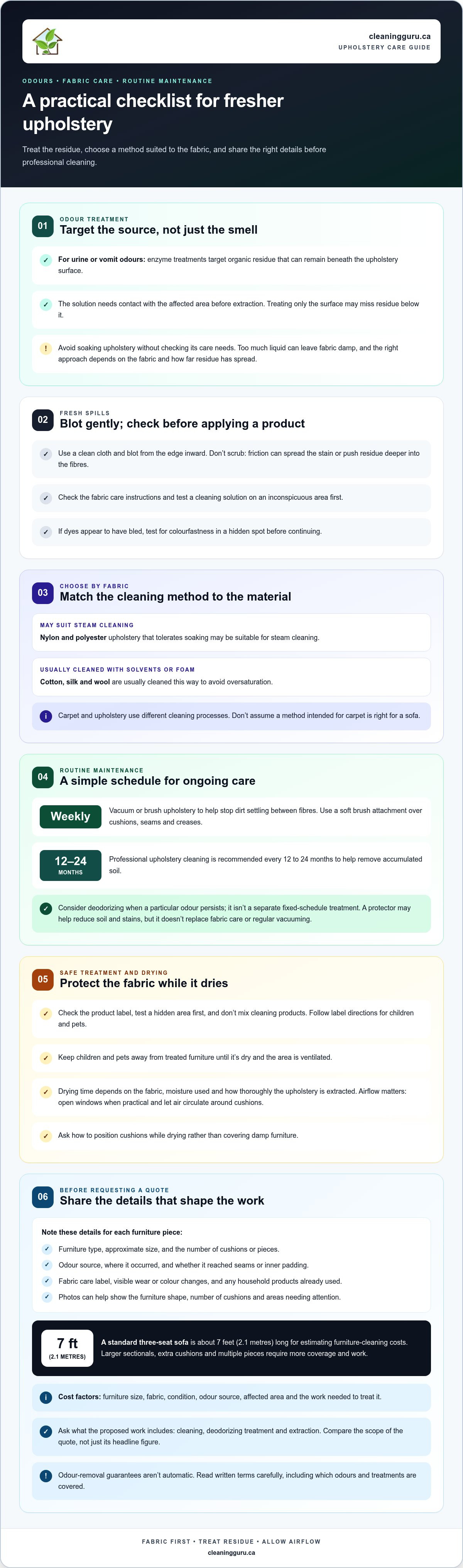
Urine and vomit can leave organic residue beneath upholstery’s surface, so wiping alone may not remove the source of the smell. Enzyme treatments target organic material; the cleaning solution needs contact with the affected area before extraction. A careful cleaning process follows the product directions and the fabric’s care needs. Using too much liquid can leave upholstery damp, while treating only the surface may miss residue below it.
For odour removal, a reputable upholstery deodorizing service should explain its treatment steps, identify the affected fabric and distinguish cleaning from masking odours. IICRC is an independent body that provides technical training courses and seminars for restoration and carpet cleaners. Ask for a clear explanation of how stains, residue and extraction are handled as part of professional upholstery cleaning.
Deodorizing products can affect fabric colour or texture if they’re unsuitable or used incorrectly. Check the product label, test a hidden area first and avoid mixing cleaning products. Follow label directions for children and pets, and keep them away from treated furniture until it’s dry and the area is ventilated.
Drying time depends on the fabric, moisture used and how thoroughly the upholstery is extracted. Airflow also matters: open windows when practical and allow air to circulate around cushions. Ask how to position cushions during drying, rather than covering damp furniture.
For a fresh spill, blot with a clean cloth, working from the edge inward. Check the fabric care instructions before using a cleaning solution, and test an inconspicuous spot first. Don’t scrub, since that can spread the stain or work residue deeper into the fibres.
Odour-removal guarantees aren’t automatic. Read any written terms carefully, including which odours and treatments they cover, before relying on a guarantee.
Before an appointment, remove loose items, identify each spill’s location and share what cleaning products you’ve already used. Those details help the technician plan the deodorizing treatment and avoid incompatible solutions.
Furniture maintenance
Weekly vacuuming or brushing helps stop dirt settling between upholstery fibres. Use a soft brush attachment over seat cushions, seams and creases, where crumbs and dust collect. For a fresh spill, blot promptly with a clean cloth instead of rubbing; friction can push soil deeper or distort the fabric.
Choose furniture cleaning methods by fabric, not by habit. Nylon and polyester upholstery that tolerates soaking may be suitable for steam cleaning. Cotton, silk and wool are usually cleaned with solvents or foam to avoid oversaturation. Before applying a cleaning solution, check the care instructions and test an inconspicuous area. If dyes appear to have bled, test for colourfastness before proceeding.
Fabric choice also affects routine care. Polyester, leather, nylon and acrylic are generally easier to maintain and more resistant to stains and oils than some other upholstery fabrics. That doesn’t make them stain-proof: wipe spills promptly and use a method suited to the specific material. Carpet cleaning and upholstery cleaning use different processes, so don’t assume a method intended for carpet will suit a sofa.
For routine upkeep, professional upholstery cleaning is recommended every 12 to 24 months. Deodorizing itself is best considered when a particular odour persists, rather than treated as a separate fixed schedule. Regular cleaning can help remove accumulated soil before it becomes harder to lift.
A protector may help reduce soil and stains, but it doesn’t replace fabric care. 3M Scotchgard™ protector is described as helping protect upholstery and extend a furniture piece’s life; a protective finish also changes absorbency and soil-removal properties. Follow the product’s care directions after it’s applied, and keep vacuuming regularly.
For help planning ongoing professional upholstery cleaning, consider the fabric, household use and visible soil together. That practical routine can help maintain the furniture’s appearance and make spills easier to address.
Ja-Doc Inglis recommends checking upholstery for colourfastness in an inconspicuous place when there is evidence that dyes may have bled, before continuing with cleaning.
What factors affect the cost of upholstery deodorizing?
Upholstery deodorizer prices vary by application. The furniture’s size, fabric, condition, odour source and affected area all help determine what treatment is suitable. A fresh spill on one cushion differs from an odour affecting a sofa’s padding, so describe the issue when requesting an estimate.
A standard three-seat sofa is about 7 feet (2.1 metres) long for estimating furniture-cleaning costs. Larger sectionals, extra cushions and multiple pieces require more coverage and work. Share the furniture type and approximate dimensions when requesting a quote. Photos can also show the shape, number of cushions and areas needing attention.
Fabric and construction affect the suitable treatment. A delicate fabric may need a different cleaning method from durable synthetic upholstery. Removable cushions can also change how the affected areas are accessed and treated. Care labels, visible wear and previous colour changes help clarify which process is appropriate for that particular piece.
The odour’s source and spread matter, too. A small, localized spill differs from residue that has reached seams or inner padding. Tell the cleaning specialist what caused the odour, where it occurred and whether you’ve already applied a household product. Those details help clarify the work needed.
Before requesting a quote, list each piece, its approximate size and the location of odours or stains. Note visible damage and any previous cleaning attempts. Ask what the proposed work covers, including cleaning, deodorizing treatment and extraction. Comparing the scope, not just a headline figure, helps you understand what the quote includes and why the furniture’s condition or fabric may affect the process.
Is deodorizing included with professional upholstery cleaning?
Professional upholstery cleaning removes soil that can contribute to everyday stale odours. Treating a specific urine or vomit odour is a separate step, not simply another name for routine cleaning. The service details should explain whether odour treatment is included, what solution is used and whether extraction follows. Check that scope before booking.
For example, a sofa cleaned to lift general soil may need a different approach from one with a urine spill in its cushion. Enzyme treatment targets organic residue, while a general odour counteractant is intended to reduce smells. These treatments serve different purposes, so identify the odour source and affected area when describing the job.
Ask for a clear outline of the cleaning process. Does it cover the upholstery surface only, or will the technician treat seams and cushion areas? Is the odour treatment applied before extraction? Will the fabric be assessed first? Specific answers help you understand what work is planned, rather than assuming that every cleaning appointment includes the same deodorizing steps.
Fabric care matters, too. A cleaning solution suitable for a durable synthetic fabric might not suit cotton, silk or wool. The technician should identify the material and select a method that fits its care needs. Share any previous treatment, such as a household spray, because leftover product can affect the next cleaning step.
Before arranging service, describe the furniture, the spill and any lingering smell. Then ask which parts of the treatment address cleaning and which address odour. For targeted help with furniture care, arrange professional upholstery cleaning and explain the issue when requesting an estimate.
Ja-Doc Inglis says upholstered fabrics are closer to the breathing zone than carpets, making regular upholstery cleaning a way to reduce allergens such as pollen, dust mites, and animal dander. That is a distinct reason to ask about routine fabric cleaning, even when a noticeable smell is not the main concern. Conversely, an odour-focused treatment should be discussed in terms of the particular smell and affected area, rather than assumed to replace general cleaning. Explain whether your priority is stale odour, a specific spill, or both, and ask the provider to clarify which parts of the service address each concern.
Cleaning Guru Carpet and Home Cleaning: Residential Carpet Cleaning
Cleaning Guru offers Upholstery Cleaning for furniture that needs professional care, including after spills or persistent odours. Upholstery cleaning addresses fabric soil, while deodorizer options can help with smells. Describe the affected piece and odour source when requesting an estimate.
If carpet and furniture both need attention, Residential Carpet Cleaning can address carpets alongside upholstery care. For workplaces, Commercial Carpet Cleaning is also available. Explain whether the concern involves a sofa, carpet or both so the cleaning can be discussed in context.
For furniture that needs more than routine home care, professional upholstery cleaning is a practical next step. Contact Cleaning Guru to discuss upholstery cleaning and deodorizer options in Calgary, or visit cleaningguru.ca.
Make your next furniture-care step count
Before arranging a deodorizing upholstered furniture service, note which furniture needs attention and what you want improved. A clear description of the fabric, affected area and previous cleaning helps frame a useful conversation about the work. Keep the care label nearby if you have it. This small preparation can make the next step more focused.
Cleaning Guru Carpet and Home Cleaning offers Upholstery Cleaning, Residential Carpet Cleaning and Commercial Carpet Cleaning. If both furniture and carpet need care, you can discuss those needs together and explain which areas matter most. Choose the service that fits your home or workplace, then share the details that will help guide the discussion.
Discuss your upholstery cleaning needs with Cleaning Guru Carpet and Home Cleaning. A thoughtful plan can make caring for your furniture feel manageable, and it’s a good step towards a cleaner, more comfortable space.
Frequently Asked Questions
What do you recommend for odours?
For urine or vomit odours, start by blotting fresh residue with a clean, absorbent cloth. Avoid rubbing, which can spread the affected area, and skip fragrance sprays that only cover smells. Check the fabric’s care instructions before using a compatible treatment. For an older or recurring smell, note which cushion or furniture area is affected when arranging cleaning.
What does a professional upholstered furniture deodorizing service include?
A professional deodorizing upholstered furniture service generally assesses the fabric and odour source, then determines suitable cleaning and deodorizing steps. Depending on the furniture, this may involve treating affected fabric and extracting soil or cleaning solution. Ask for the work scope to distinguish general upholstery cleaning from targeted odour treatment. That helps set clear expectations for cushions, seams and other affected areas.
How do upholstery cleaners remove smoke, pet and mildew odours?
Odours vary by source and upholstery fabric. Smoke may leave residue across exposed surfaces, while pet odours may be concentrated around a cushion or seam. Upholstery cleaning addresses fabric soil, and deodorizer options can help with smells. For a musty smell, identify and address ongoing dampness, since treating upholstery alone won’t stop moisture from returning.


