

Berber’s loops matter as much as the stain. Berber carpet cleaning specialists assess the carpet and the mark before choosing a treatment, using care to avoid rough scrubbing that can snag the loops. Drying depends on the cleaning method and moisture left in the carpet; steam-cleaned carpets usually take 6 to 12 hours to dry.
It’s understandable to worry that stain or odour treatment could leave loop-pile carpet too wet or affect its texture. A careful approach starts by identifying the soiling, then treating the affected area and removing as much solution and moisture as practical.
This guide explains how Berber carpet cleaning works, what specialists consider when treating stains and odours, and what can affect drying time. You’ll also learn what to expect from professional cleaning, so you can make an informed decision for your Calgary home.
Key Takeaways
- Note the carpet’s fibre and loop construction, plus the location of stains, before planning a cleaning approach.
- Learn why identifying the source of a stain or odour helps guide targeted treatment instead of repeated scrubbing.
- Understand how cleaning method, airflow and room conditions affect when carpet feels dry again.
- See what to expect from professional carpet cleaning and how to prepare your home for the service.
Cleaning consultation and service process
A useful consultation starts with the carpet, not a one-size-fits-all plan. Describe the Berber carpet’s fibre, if known, the rooms involved, visible stains, odours, and any previous treatments. Point out loose loops or worn patches before cleaning begins. These details help shape the approach and keep the estimate focused on the carpet’s condition.
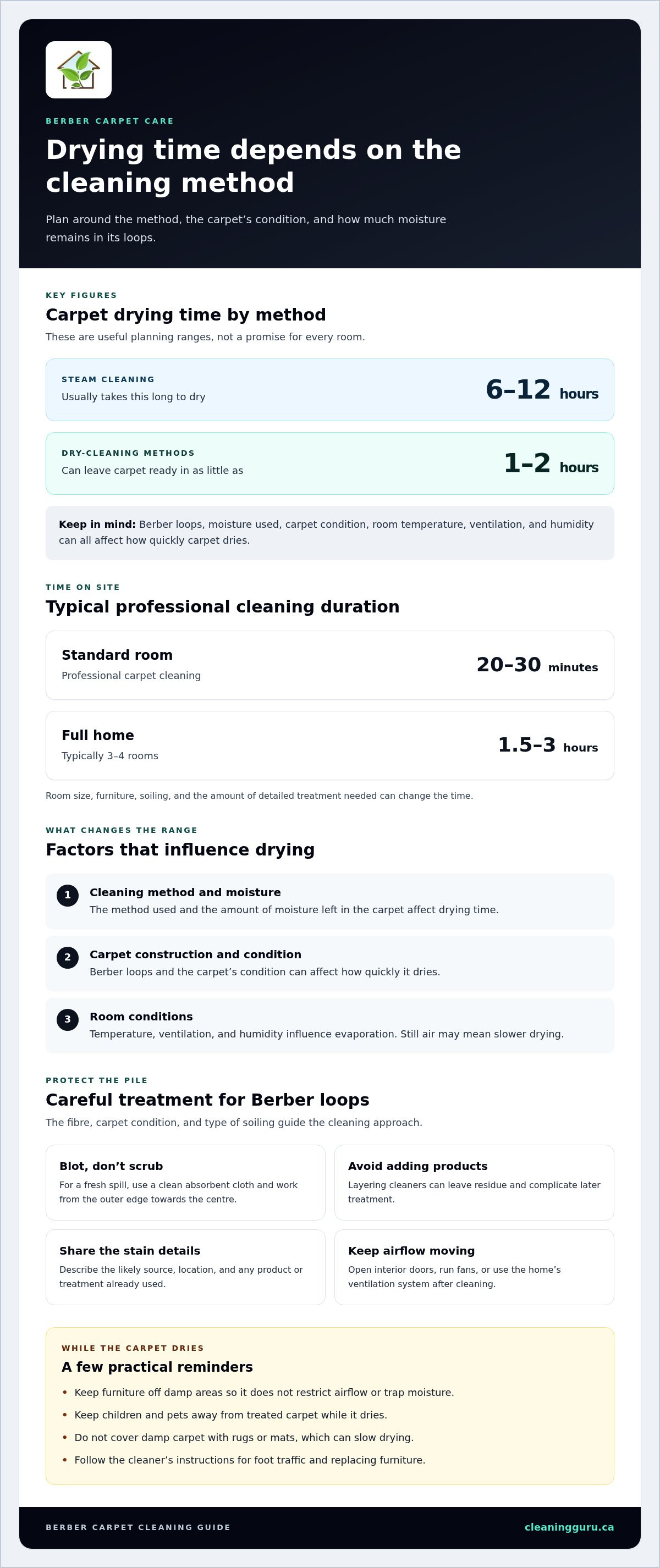
Professional carpet cleaning for a standard room typically takes 20 to 30 minutes. A full home with 3-4 rooms typically takes 1.5 to 3 hours. The time can depend on room size, furniture, soiling, and the amount of detailed treatment needed. An estimate should clarify which areas are included and whether stain or odour work forms part of the planned service.
- Describe the concern. Identify where a spill occurred, what caused it, and whether it has been treated before.
- Review the carpet. Note its loop construction, condition, traffic lanes, and any areas needing extra attention.
- Set the scope. Specify the rooms and treatment priorities, such as a hallway stain or odour near a pet’s usual resting spot.
- Prepare the space. Follow the agreed plan for furniture and access so the cleaning can proceed efficiently.
For Calgary homeowners, local service details matter because the appointment should suit the property and the areas being cleaned. Describe the home’s location, access, and carpeted rooms when requesting an estimate. Installed Berber carpet and a separate area rug can involve different materials and construction, so specify which one needs cleaning. That distinction helps define the requested work.
Clear service means explaining the proposed treatment, areas covered, and preparation steps in plain language. Ask for an estimate based on the rooms and concerns you described. If you also want upholstery cleaned, include it in your request so the service scope is clear from the start.
Stain and odour removal
Start with the source of the stain, because coffee, grease, and pet accidents call for different treatment. Blot a fresh spill with a clean, absorbent cloth, working from its outer edge toward the centre. This helps limit spread across the Berber loops. Avoid rubbing, which can distort looped yarn and push residue deeper into the carpet.
Identify any product already used. Household cleaners can leave residue or affect colour, so share the product name during an assessment. The right method depends on the stain, carpet fibre, and previous treatment. Testing a suitable solution in an inconspicuous spot helps assess its effect before treating a visible area. Follow the carpet’s care instructions, too.
Pet stains require attention to both the visible mark and the source of lingering odour. If urine has reached the backing or underlay, surface cleaning alone may leave odour-causing residue below. Explain where the accident happened and whether it has happened repeatedly. That information helps identify the treatment area and whether the process needs to address more than the carpet pile.
- Blot, don’t scrub. Use a clean cloth to lift fresh liquid from the loops.
- Remove solids gently. Lift them with a spoon or dull edge, taking care not to pull the yarn.
- Avoid adding products. Don’t layer cleaners, as residue can complicate later treatment.
- Describe the stain. Share its likely source, location, and any cleaning attempts.
For an area rug, check its fibre and backing before applying water or cleaner. A rug’s construction can differ from installed carpet, so the same method may not suit both. Prompt, careful action can limit the spread of a spill and the residue it leaves. For recurring pet odours or set-in stains, professional carpet cleaning can treat the affected area according to its material and condition.
Carpet drying time
Cleaning method makes a clear difference to carpet drying times. Carpets cleaned using steam cleaning usually require 6 to 12 hours to dry. Dry-cleaning methods can leave carpet ready in as little as 1 to 2 hours. These are useful planning ranges, not a promise for every room. Berber loops, the amount of moisture used, and the carpet’s condition all affect how quickly it dries.
Moisture doesn’t leave every carpet at the same pace. Room temperature, ventilation, and humidity in the home’s environment can influence evaporation. A closed room with still air may dry more slowly than one with air moving through it. Ask which cleaning method is planned and what the professional recommends for your rooms. An experienced cleaner can explain how the method affects moisture and drying.
Help the carpet dry by increasing air movement. Open interior doors, run fans, or use the home’s ventilation system. Keep furniture off damp areas until the carpet is dry, since furniture can restrict airflow and trap moisture underneath. If a piece must be returned sooner, place it only as directed to avoid marks or colour transfer. Keep children and pets away from treated carpet while it dries.
- Before cleaning: Move small furniture and clear toys or other loose items.
- After cleaning: Improve airflow and follow the cleaner’s instructions for foot traffic.
- Before replacing furniture: Make sure the carpet and the furniture’s contact points are dry.
Persistent dampness can leave carpet feeling uncomfortable and may contribute to musty odours. Don’t cover a damp area with rugs or mats, which can slow drying. If drying takes longer than expected, check for blocked airflow, heavy furniture, or moisture concentrated in one spot. These checks help protect the carpet as it dries and distinguish lingering odours from the scent of fresh cleaning.
Berber and loop-pile carpet cleaning
Berber loops call for measured cleaning, not aggressive scrubbing. Fibre, carpet condition, and soiling guide the approach.
Berber Cleaning Price Factors
The estimate depends on the rooms and work involved. Room size, carpet material, soil level, stain treatment, and access all help define the scope. A heavily soiled hallway needing focused treatment differs from a lightly soiled bedroom. Describe the carpeted areas and concerns clearly so the estimate reflects the work, not just the visible stain.
Professional Cleaning Frequency
Carpet and rug manufacturers usually recommend professional cleaning every 12-24 months to maintain the carpet’s warranty. Many carpet cleaning professionals recommend professional cleaning at least once a year. Choose a schedule by considering manufacturer guidance, household traffic, and soil buildup. Pets, children, and busy entryways can make carpet need attention sooner than a lightly used room.
DIY Steam Cleaning Risks
A rental cleaning machine can leave Berber loops overly wet if it applies more solution than it removes. Excess moisture may reach the backing, while leftover cleaner can attract soil or leave dull residue. A machine’s brush can also snag loops. Avoid forceful scrubbing and follow the carpet maker’s care directions.
Choosing a Method for Loop Pile
Hot-water extraction is recognized by carpet and rug manufacturers as a professional cleaning method for maintaining a carpet’s warranty. The carpet’s material and condition still matter. Before cleaning, inspect for loose loops, test cleaning solutions in an inconspicuous spot, and use controlled extraction to remove moisture and soil. A carpet cleaning professional can explain the method and its fit for your Berber carpet. Discuss allergens and the cleaning process without assuming one method suits every carpet.
For help with loop-pile carpet, request professional carpet cleaning and describe the carpet’s material, condition, and cleaning concerns.
Cleaning Guru Carpet and Home Cleaning: Residential Carpet Cleaning
Cleaning Guru Carpet and Home Cleaning provides Residential Carpet Cleaning for Calgary households dealing with tracked-in soil, everyday wear, or carpet stains. Share the rooms involved and any Berber-specific concerns when requesting an estimate, such as loose loops, pet odours, or previous cleaning attempts. This helps clarify the areas and priorities for the visit.
Cleaning Guru uses portable equipment for efficient cleaning. If you also need upholstery cleaned, include it in your request. Commercial Carpet Cleaning is available for Calgary business spaces as well. Request a free estimate to understand the proposed scope before deciding on service.
For help planning carpet care at home, contact Cleaning Guru Carpet and Home Cleaning.
Make your next carpet-care step easier
Before arranging a cleaning, gather details that will help make the conversation useful: the carpet’s care label, its age if known, and the location and cause of any stain. A clear photo can show loop condition or changes in colour. Note any products already applied, especially if residue or odour remains.
These details give Berber carpet cleaning specialists a better starting point for discussing the carpet’s material and your priorities. Consider household routines, too, such as pets entering through a particular doorway or frequent traffic across a hallway. That context helps shape practical care choices beyond a single cleaning visit.
When you’re ready to discuss carpet care for your home or workplace, contact Cleaning Guru Carpet and Home Cleaning. A clear description of the rooms and concerns gives the conversation a helpful place to begin, and you can take the next step at your own pace.
Frequently Asked Questions
What makes Berber carpet different and how does its construction affect cleaning?
Berber carpet usually has looped yarn rather than cut pile, so its surface and snag risks differ. A pulled loop can stand out against surrounding rows, especially in a hallway. Check the carpet label for fibre details, then note loose loops or worn seams before cleaning. These observations help distinguish a surface stain from a construction issue that needs careful handling.
How do professional carpet cleaners safely clean Berber carpet?
Cleaning Guru’s approach takes the carpet’s material, condition, and care instructions into account. Before treatment, point out repairs, loose threads, colour changes, and any spot where a product was previously applied. A small, inconspicuous test area can help assess how the material responds. Also discuss furniture placement and access, especially in rooms with narrow corners or delicate items nearby.
What cleaning methods should be avoided on Berber carpet?
Avoid hard scrubbing, sharp tools, and brushes that catch or pull the loops. Don’t apply bleach or mix household cleaners, since an unsuitable product can affect colour or leave residue. Excessive water can also cause problems if it remains in the carpet backing. If the care label gives specific restrictions, follow them rather than using a general carpet-cleaning recipe.
How can I remove stains from Berber carpet without damaging it?
For a fresh spill, gently lift solids and press a clean, absorbent cloth onto the liquid. Avoid pouring cleaner directly onto the carpet, as it can spread beyond the mark. If you use a suitable carpet product, follow its label and test an inconspicuous spot first. Stop if colour transfers or loops begin to distort, and note the stain’s source for treatment.
How do I find and compare Berber carpet cleaning specialists near me in Canada?
For Calgary service, compare the proposed scope with your carpet’s construction and the rooms you want cleaned. Say whether the carpet is installed or an area rug, describe any stains, and list products already used. Review what the estimate covers, the proposed cleaning approach, and the preparation instructions. These details help you judge whether the planned work addresses your concerns.
What questions should I ask a carpet cleaner before hiring them?
Ask what approach is planned for your Berber carpet, which areas the estimate includes, and how stain treatment affects the scope. Ask what preparation is needed and what drying guidance applies to your rooms. If you have a pet stain, share whether it has reached a cushion or backing. Clear answers help you understand the process before scheduling.


