

A deep clean should suit the carpet fibre, not just the stain. Synthetic carpet deep cleaning starts with identifying whether the carpet is nylon, polyester, or polypropylene, then choosing an appropriate cleaning method. Blot spills promptly, treat stains gently, and let the carpet dry completely before using the area again.
It’s easy to assume all synthetic carpets can be cleaned the same way. But fibre type, the stain, and the carpet’s condition all affect what works best, so a one-size-fits-all method may not be suitable.
This guide covers common grease, pet, coffee, and wine stains, along with caring for polyester carpet and drying and brushing synthetic fibres after cleaning. You’ll also learn how carpet type affects deep-cleaning options, helping you choose an approach for your home.
Key Takeaways
- Blot spills promptly and treat stains gently, working from the outside towards the centre to help limit spread.
- Let cleaned fibres dry fully with good airflow, and keep them away from direct heat and sunlight.
- Match maintenance and deep-cleaning methods to the carpet fibre, especially when caring for polyester.
- Learn how nylon, polyester and polypropylene can call for different cleaning approaches before choosing a method.
Cleaning grease, pet, coffee, and wine stains
Identify the spill and carpet fibre before applying a cleaner. Grease, pet accidents, coffee, and wine leave different residues, so match your treatment to the stain.
Identifying Grease, Pet, Coffee, and Wine Stains
Grease can leave a slick or darkened patch, while coffee and wine may cause visible colour marks. Pet accidents can leave moisture, odour, or stains that reappear after drying. Check the carpet label for nylon or another synthetic fibre, then note the stain’s location and appearance. This helps you select a mild treatment instead of scrubbing without a plan.
Pre-treating Carpet Stains
Blot a fresh spill immediately with a clean, dry cloth. Press rather than rub, which can push residue deeper into carpet fibres or spread it across the surface. For a synthetic rug stain, use a mild detergent solution and soft-bristled brush; work gently from the outside towards the centre. For a persistent nylon carpet stain, mix ¼ teaspoon of dish detergent with 1 cup of warm water. Another pre-treatment recipe uses 1 tablespoon each of dish soap and vinegar in 2 cups of warm water. Test a small, hidden spot first, then dab the solution onto the stain and blot with a clean cloth. Don’t use bleach or combine vinegar with bleach, as the mixture creates toxic fumes.
Nylon carpet can handle regular care, but stain removal depends on the spill and how long it has set. A fresh coffee mark, for example, needs different care from an older grease stain. Use a light touch, then blot with a damp cloth to remove leftover cleaning solution.
When choosing a carpet cleaning service in Canada, look for a clear explanation of the process, including how fibres are identified and stains treated. A written estimate and straightforward answers about the cleaning method can also help you compare services.
Canadian carpet warranties can include care instructions that affect coverage. Manufacturers usually recommend professional carpet cleaning every 12-24 months to maintain the carpet’s warranty, while the warranty’s own instructions determine suitable methods.
Drying and brushing carpet fibres
After cleaning, blot up surface moisture and keep air moving across the carpet. Let the fibres dry fully before normal use, then gently restore the pile.
Drying Carpet After Cleaning
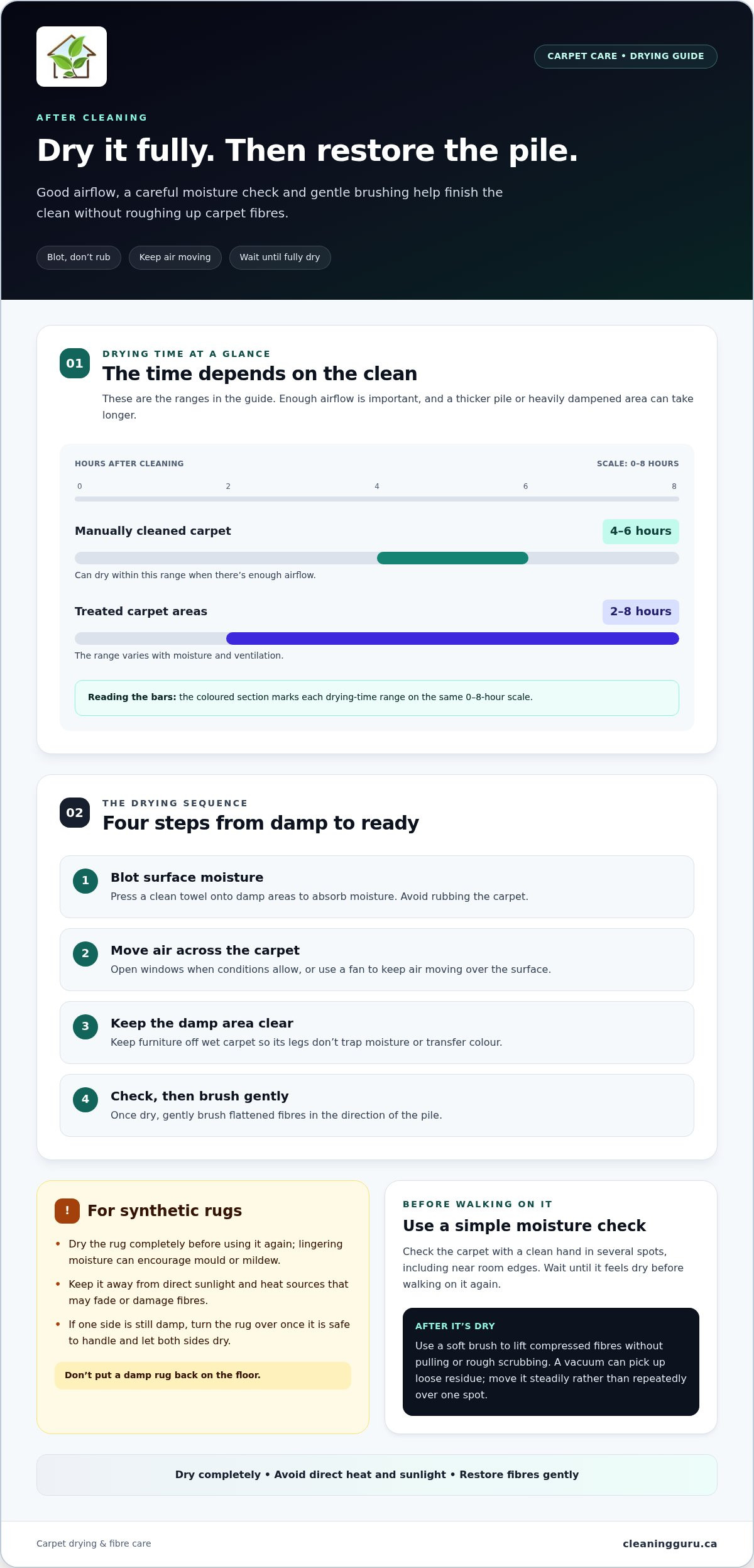
Blot damp areas with a clean towel to absorb moisture without rubbing the carpet. Open windows when conditions allow, or use a fan to move air across the surface. Keep furniture off wet areas so its legs don’t trap moisture or transfer colour. Once the carpet is dry, gently brush flattened fibres in the direction of the pile.
Carpet Drying Time
Manually cleaned carpet can dry within 4-6 hours when there’s enough airflow. Treated carpet areas may take 2-8 hours after cleaning, depending on moisture and ventilation. These ranges can differ because a thicker pile or a heavily dampened area takes longer to dry. Check the carpet with a clean hand in several spots, including near room edges, before walking on it again.
Rug Drying and Mildew Prevention
Dry synthetic rugs completely before using them again, as lingering moisture can encourage mould or mildew. Keep the rug away from direct sunlight and heat sources that may fade or damage the fibres. If one side remains damp, turn the rug over once it is safe to handle and let both sides dry. Don’t put a damp rug back on the floor.
After drying, use a soft brush to lift compressed fibres without pulling or rough scrubbing. A vacuum can pick up loose residue once the carpet is dry; move it steadily rather than repeatedly over one spot. If a large area stays damp despite airflow, professional carpet cleaning support can help address the cleaning needs behind it.
Polyester carpet maintenance and deep cleaning
Regular care limits the soil that settles between deeper cleans. Vacuum synthetic rugs at least once a week, then increase frequency in high-traffic areas. Polyester carpet in busy areas should be vacuumed 3-4 times a week. For a hallway, move the vacuum slowly over the traffic path instead of making quick passes.
Technique matters as much as frequency. The Government of Canada advises vacuuming slowly in the direction of the pile, since pressure or rubbing can damage carpet fibres. Adjust suction so the vacuum lifts dirt without pulling at the textile. Rotate synthetic rugs periodically to help reduce uneven wear and fading. Outdoor rugs may need more frequent cleaning because they face the elements.
For odour care, sprinkle baking soda over the carpet and leave it for at least 15 minutes before vacuuming. For musty or old odours, it can sit overnight; several hours can also support deodorizing. Keep the powder layer light, and vacuum thoroughly so it doesn’t remain among the fibres. Avoid adding essential oils freely to homemade mixtures; the recommended amount is only a few drops.
Deep-cleaning timing depends on fibre, traffic and care instructions. Polyester carpets should be professionally deep cleaned yearly. Carpet and rug manufacturers usually recommend professional cleaning every 12-24 months to maintain the carpet’s warranty, so follow the specific warranty instructions for your flooring. An entryway exposed to grit may need attention sooner than a lightly used bedroom.
Between cleanings, deal with tracked-in soil before it spreads. Place a mat at busy entrances, vacuum high-use paths more often, and rotate rugs to distribute wear. Olefin is also a synthetic fibre, but polyester care advice may not apply to it. Check the fibre label and choose a method suited to the material before using a cleaner or deodorizer.
Carpet types and deep-cleaning options
Check the fibre label before choosing a method. Nylon, polyester, and polypropylene need fibre-aware care, especially when heat or moisture is involved.
Deep-Cleaning Methods for Synthetic Carpet
For home care, first vacuum loose debris from the entire carpet, especially traffic areas. Apply a mild detergent solution sparingly and follow the carpet label’s care instructions. Work gently with a soft brush, then blot away residue with a clean, damp cloth. Synthetic carpet cleaning with hot water and detergent isn’t suitable for every fibre.
Carpet and rug manufacturers recognize professional hot water extraction as a method for maintaining a carpet warranty. The right method depends on the fibre, the care instructions, and how much soil has accumulated.
Solutions for Nylon, Polyester, and Polypropylene
A mild detergent solution is a practical starting point for synthetic carpet, but don’t assume one cleaner suits every fibre or finish. For a persistent nylon stain, mix ¼ teaspoon of dish detergent with 1 cup of warm water. Apply a small amount, then blot rather than soaking the carpet. For polyester area rugs, machine washing on the cold-water cycle is recommended, but this applies to rugs, not fitted carpet.
Olefin carpet fibre has a low melting point starting at 225 degrees. Don’t steam clean olefin, since steam cleaning can discolour or damage its fibres. Check the carpet label before using heat or a cleaning solution.
Steps to Deep Clean Without Damage
Protect carpet fibres with a simple sequence: vacuum loose debris, identify the carpet type, use a suitable mild cleaner, and blot away residue. Control moisture and let the carpet dry fully before regular use. Avoid bleach and harsh chemicals on synthetic rugs, as they can damage fibres and cause fading.
For fibre-specific cleaning help, get support with a deep clean suited to your carpet.
Cleaning Guru Carpet and Home Cleaning: Residential Carpet Cleaning
Cleaning Guru Carpet and Home Cleaning provides Residential Carpet Cleaning for carpets that need more than routine vacuuming or spot treatment. When embedded soil, heavy traffic, or lingering marks affect a room, professional cleaning can address buildup across the carpet. The best approach depends on the fibre and its condition, so share what you know about the material and any previous stain treatments.
For workspaces, Commercial Carpet Cleaning helps care for carpet exposed to regular foot traffic. Cleaning Guru also provides Upholstery Cleaning for fabric-covered furniture, which can be useful when carpets and seating need attention together. You can request a free estimate to discuss your cleaning needs.
Contact Cleaning Guru Carpet and Home Cleaning to discuss Residential Carpet Cleaning for your space.
Make your next carpet-care step count
Use what you’ve learned to make a practical carpet care plan. Note the fibre type, areas that collect the most soil, and any stains that keep returning. This information can guide your next cleaning choice and help prevent a quick fix from damaging the fibres. A steady care routine also makes future cleaning decisions easier.
For synthetic carpet deep cleaning, choose an approach suited to the material and the carpet’s condition. If stains persist, soil is embedded, or you’d rather leave the work to a professional, Cleaning Guru Carpet and Home Cleaning offers Residential Carpet Cleaning and Commercial Carpet Cleaning, as well as Upholstery Cleaning.
Take the next step at a pace that feels right for your space. Contact Cleaning Guru Carpet and Home Cleaning to discuss your cleaning needs. A thoughtful plan can help you care for your carpet with confidence.
Frequently Asked Questions
What is synthetic carpet deep cleaning, and how often should it be done?
Synthetic carpet deep cleaning removes soil held below the surface, rather than just freshening the visible pile. The right interval depends on fibre, foot traffic, soil buildup and warranty directions. Polyester carpets are recommended for professional deep cleaning yearly; nylon carpets at least once a year. For a synthetic rug, professional cleaning is recommended every 12-18 months, or as needed based on use.
What equipment is most effective for deep cleaning synthetic carpet?
A vacuum removes dry debris, while a suitable carpet extractor can provide a deeper clean. Carpet and rug manufacturers recognize professional hot water extraction as a warranty-maintenance method. For spot care at home, use a soft-bristled brush and clean cloth instead of scrubbing aggressively. Check the carpet label before choosing equipment, since heat-sensitive fibres may not suit every machine or method.
How do professional hot water extraction and DIY carpet cleaning compare?
Professional hot water extraction is designed to clean carpet more thoroughly than surface vacuuming, while DIY care gives you control over small spills and routine upkeep. A fresh spot, for example, may need gentle blotting, while widespread soil may call for a deeper clean. DIY cleaning also requires even application and thorough removal of residue. Whichever approach you choose, follow the fibre’s care instructions.
How long does synthetic carpet take to dry after deep cleaning?
Manually cleaned carpet can dry within 4-6 hours when airflow is sufficient. Drying can take longer if the carpet holds more moisture, ventilation is limited, or the pile is dense. Keep furniture and regular foot traffic off damp sections, and check more than one spot before resuming use. A surface that feels dry may still be damp deeper in the pile.
What risks can cause synthetic carpet to shrink, fade, or develop mildew during cleaning?
Excessive heat can damage heat-sensitive fibres, while direct sunlight and nearby heat sources can fade or harm synthetic fibres. Lingering moisture can encourage mould or mildew, particularly if a rug is used again before it dries. Avoid harsh chemicals and bleach, which can damage fibres and cause fading. Check the fibre label before selecting a cleaning method.
How can you remove stains and odours from synthetic carpet safely?
Blot fresh spills with a clean, dry cloth, then use a mild detergent solution suited to the carpet. For odours, baking soda can sit on carpet before vacuuming; allow at least 15 minutes for a basic treatment, or leave it overnight for musty or old smells. Use only a few drops of essential oil in a carpet-cleaning mixture, and never combine vinegar with bleach.


