

Coffee stains aren’t always permanent. Coffee stain removal from upholstery is generally easier when you treat a fresh spill promptly, before it dries and sets into the fabric. Blot the stain rather than rubbing it, then use a homemade lemon and dish detergent solution and rinse the area with cold water.
A coffee spill can look alarming, especially on a favourite chair or sofa. Gentle, prompt blotting can help limit the mark without spreading it. Because fabrics respond differently to moisture and cleaners, check the care label and test any suitable product on a hidden spot first.
Here, you’ll learn how to prepare and apply the solution, blot and rinse the upholstery, and handle a stain that remains. You’ll also find out when a delicate fabric or stubborn mark calls for professional upholstery cleaning instead of more home treatment.
Key Takeaways
- Check the upholstery care code before choosing a cleaning method: “W” and “WS” indicate water-based methods, while “S” and “X” call for different care.
- Apply the lemon-and-dish-soap mixture gently, alternating blotting with a clean, dry cloth instead of rubbing the fabric.
- Rinse away soap residue with cold water, then let the upholstery air-dry without applying heat.
- For suede, velvet, or a mark that persists after careful treatment, professional upholstery cleaning can be a better next step.
Are coffee stains permanent?
Fresh coffee stains are generally easier to remove before they dry and set into the fabric. Work gently: rubbing can spread the spill and push coffee deeper into the upholstery.
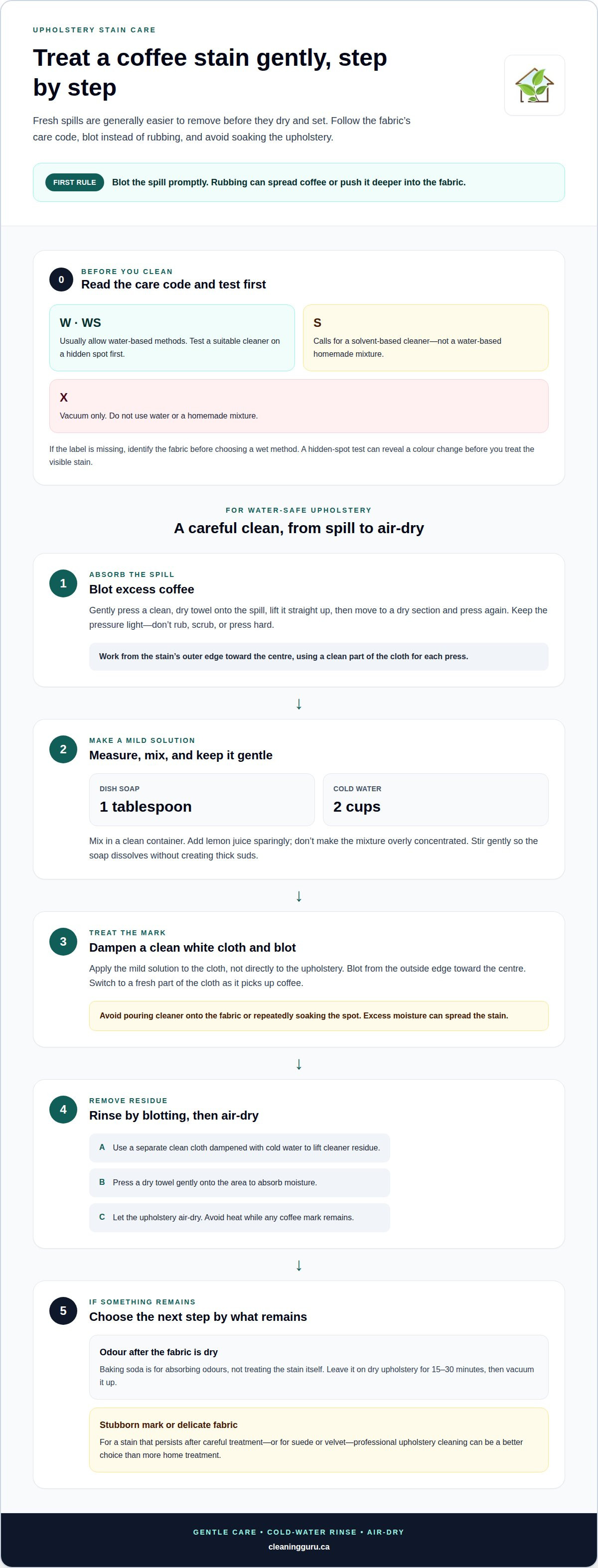
For a fresh spill, check the upholstery care code, blot away excess coffee, then clean and rinse only if the label permits. “W” and “WS” usually allow water-based methods; “S” calls for a solvent-based cleaner, while “X” means vacuum only and no moisture.
To help prevent water rings or colour fading, follow the care code, test a hidden spot, and avoid soaking the fabric. Professional cleaning is a sensible choice for suede or velvet, or if a stubborn stain remains after careful treatment.
-
Blot excess coffee from upholstery
Gently press a clean, dry towel onto the spill to absorb excess coffee. Lift it straight up, move to a dry section, and press again. Check whether the towel is still picking up liquid before moving on. Don’t rub, scrub, or press hard, as this can spread the mark or push coffee further into the fabric.
-
Blot from the outside in
Start blotting at the stain’s outer edge and work toward the centre. Use a clean part of the cloth for each press to avoid transferring coffee back onto the upholstery. Keep the pressure light and controlled to contain the mark rather than widen it across the sofa or into nearby clean fabric.
-
Rinse and blot upholstery dry
After treating the spot, lightly blot it with a clean cloth dampened with cold water to lift residue. Don’t pour water directly onto the sofa or leave the fabric saturated. Press a dry towel gently onto the area to absorb moisture. Let it air-dry, and avoid heat while any coffee mark remains.
Homemade lemon juice and dish detergent solution
Yes, dish soap can help lift coffee from upholstery, while vinegar is another cleaning-solution ingredient. Baking soda is better suited to absorbing odours from dry upholstery than treating the stain itself. Keep these options separate, and follow the fabric’s care code before applying any liquid.
- Check the care code and test a hidden spot first. Water-based methods are usually suitable for “W” and “WS” upholstery; “S” calls for solvent-based cleaning, and “X” means vacuum only. Even on water-safe fabric, testing a hidden area can reveal a colour change before you treat the visible stain.
- Mix 1 tablespoon of dish soap with 2 cups of cold water in a clean container. Add lemon juice sparingly, without making the mixture overly concentrated. Stir gently so the soap dissolves, rather than creating a thick layer of suds that may be difficult to remove from the fabric.
- If the care code allows water-based cleaning, dampen a clean white cloth with a mild soap solution and gently blot the coffee mark. Work from the outer edge toward the centre, using a fresh part of the cloth as it picks up coffee. Don’t pour cleaner onto the upholstery, as excess moisture can spread the stain.
- Rinse the treated spot by blotting with a separate cloth dampened with cold water. Follow with a dry towel to absorb moisture, then let the fabric air-dry. If a stubborn mark remains, avoid stronger mixtures or repeatedly soaking the same spot.
- Use baking soda only after the upholstery is dry if an odour remains. Leave it on the fabric for 15-30 minutes, then vacuum it up. For a persistent stain that resists careful home treatment, consider professional upholstery care.
For a coffee stain on carpet, apply a solution of dish soap, white vinegar and warm water, using one tablespoon of white vinegar. Blot gently with a clean cloth until the stain lifts. Alternatively, a mixture of laundry detergent and cool water can be left on a carpet coffee stain for up to a few minutes before rinsing.
For a remaining coffee stain on cotton, cotton-blend or linen clothing, apply liquid laundry detergent or dish soap with a splash of cold water, let it sit, then wash the garment as usual. A clothing treatment can use equal parts vinegar and liquid laundry detergent; let it sit for at least 5-10 minutes before rinsing.
Removing coffee stains from different surfaces
Choosing a method for coffee stain removal from upholstery starts with the fabric’s care code. A dried coffee mark needs an approach suited to the material, not a treatment borrowed from carpet or clothing.
- Check the care label before adding moisture. “W” and “WS” usually allow water-based cleaning, while “S” calls for a solvent-based cleaner. “X” means vacuum only, so don’t use water or a homemade mixture. If the label is missing, identify the fabric before choosing a wet method.
- Test a suitable cleaner on a hidden spot, such as the back of a sofa cushion. Apply a small amount and check for colour changes before treating the visible mark. This precaution also applies when using a portable carpet and upholstery cleaner, as its cleaning solution may affect the fabric.
- For coffee stain removal from upholstery marked “W” or “WS,” start by blotting gently with a cloth dampened with warm water. If the mark remains, use a mild dish-detergent solution or mix 1 tablespoon of dish soap, 1 tablespoon of white vinegar, and 2 cups of warm water. Apply it with a cloth, not by pouring it onto the fabric.
- For a dried or stubborn stain, follow the upholstery cleaner’s directions and work in small sections. Avoid vigorous scrubbing, which can spread the mark or disturb the fabric’s surface. Suede and velvet often need professional cleaning, so don’t experiment with water or vinegar on these materials.
- Keep carpet and clothing treatments separate from sofa care. A mixture or stain treatment suited to carpet or clothing may not be suitable for upholstery. After cleaning a sofa, blot away residue with a clean cloth dampened with cold water, then absorb moisture with a dry towel.
Rinsing upholstery with cold water
Rinse after applying cleaner to remove loosened coffee and soap residue. Use a damp cloth, not a stream of water, so you can control how much liquid reaches the sofa.
- Fill a clean container with cold water and dampen a fresh, white cloth. Wring it out until it no longer drips. A merely damp cloth lets you rinse the treated area without soaking the cushion or spreading moisture into nearby fabric.
- Press the cloth gently onto the cleaned spot, then lift it. Work from the outside edge toward the centre, using a clean section of cloth with each pass. This helps pick up cleaning solution and coffee instead of carrying them across the upholstery.
- Blot the rinsed area with a dry towel. Press down gently, lift, and move to a dry part of the towel. Keep blotting as the towel absorbs moisture. Don’t rub the fabric or use a hair dryer, heater, or other heat source to speed drying.
- Look closely at the spot once the surface moisture has been absorbed. If it still feels soapy, repeat the cold-water blot with a clean cloth, then blot dry again. If a coffee mark remains, avoid adding more cleaner before rinsing away residue from the previous application.
- Let the sofa air-dry before judging the result. Keep people and pets from pressing on the damp area, which can transfer dirt or compress the fabric unevenly. Don’t cover the spot while it dries, and avoid heat to speed the process.
- For a stain that persists after careful cleaning and rinsing, stop repeating the treatment. Repeatedly wetting upholstery can leave excess moisture behind. Arrange professional upholstery cleaning for help with a stubborn sofa stain.
For carpet, the corresponding guidance is straightforward: After cleaning a coffee stain from carpet, rinse the area with cold water and blot it dry. That direction applies to carpet, while the sofa procedure concerns upholstery. Keeping the material specified in each instruction clear avoids treating carpet and sofa fabric as interchangeable. The carpet guidance consists of rinsing with cold water after cleaning, followed by blotting dry.
Cleaning Guru Carpet and Home Cleaning: Residential Carpet Cleaning
Cleaning Guru Carpet and Home Cleaning provides upholstery cleaning for sofas and other upholstered furniture in Calgary. If a coffee stain remains after careful home treatment, or the fabric needs more cautious care, professional cleaning is a practical next step.
For coffee spills on floor coverings, Cleaning Guru also offers residential carpet cleaning in Calgary. Commercial carpet cleaning is available for business spaces with carpeted areas. Choose the service that matches the surface, whether it’s a stained sofa at home or carpet in a commercial setting.
Make upholstery care part of your routine
A coffee spill is a useful reminder to keep a clean, absorbent cloth handy and check furniture care labels. For coffee stain removal from upholstery, let the fabric’s care requirements guide your next step, especially if you’re caring for several pieces or planning a broader home refresh.
If a stain is difficult to manage at home, or you’d rather leave sofa care to a professional, Cleaning Guru Carpet and Home Cleaning can help with upholstery cleaning in Calgary. Get in touch to discuss your furniture cleaning needs and take a practical step toward a cleaner, more comfortable space.
Contact Cleaning Guru Carpet and Home Cleaning to talk about your upholstery cleaning needs. A little care now can help you feel more prepared for the next everyday spill.
Frequently Asked Questions
What cleaning solution removes coffee stains from fabric upholstery safely?
For coffee stain removal from upholstery, first check the care label and test a hidden spot. If water-based cleaning is allowed, mix cool water with a small amount of mild, clear dish soap. Blot the stain with a clean white cloth, working from the outside inward. Use a separate cloth dampened with plain water to lift soap residue, then let the fabric air-dry without rubbing or soaking it.
How do you clean coffee stains from microfiber, leather, and suede upholstery?
Use the upholstery care label to choose a cleaning method. For water-safe microfiber, test first, then blot with a lightly damp cloth and a little mild soap solution to help avoid water marks. Wipe leather with a clean, barely damp cloth and follow the maker’s care directions. For suede, blot gently and avoid wet cleaners; once dry, use a suede brush. Cleaning Guru’s upholstery cleaning service in Calgary can help with stubborn stains or delicate pieces.


