

Salt isn’t a reliable way to remove a red wine stain from carpet. For red wine carpet stain treatment in Calgary, blot the spill with a clean, absorbent cloth rather than scrubbing, and start as soon as you can, ideally within five minutes. Salt may soak up some surface liquid, but it can leave gritty residue behind.
It’s tempting to reach for a pantry remedy when wine spills. Baking soda may absorb some moisture, but neither baking soda nor salt is a dependable fix for the stain. This guide explains what these remedies can and can’t do, how to treat a fresh spill, and how to rinse and dry the carpet without spreading the mark. You’ll also learn when a persistent or delicate-carpet stain is a good reason to seek professional help in Calgary.
Key Takeaways
- Blot fresh wine with a clean absorbent cloth instead of scrubbing, and treat baking soda as an aid for moisture, not a reliable stain remover.
- Salt may soak up some surface liquid, but carpet fibre, dye, stain age and previous cleaning products all affect removal.
- Use care with cleaning solutions: dilute vinegar before applying it, then rinse the area with plain water and dry the carpet thoroughly.
- Consider professional carpet cleaning for a persistent stain or a spill on delicate carpet, where the right treatment depends on the material and stain history.
Does Baking Soda Remove Red Wine Stains?
Baking soda may absorb some moisture, but it isn't a reliable red wine stain treatment. For a fresh spill, blot promptly and avoid scrubbing the carpet pile.
Blot Fresh Wine Immediately
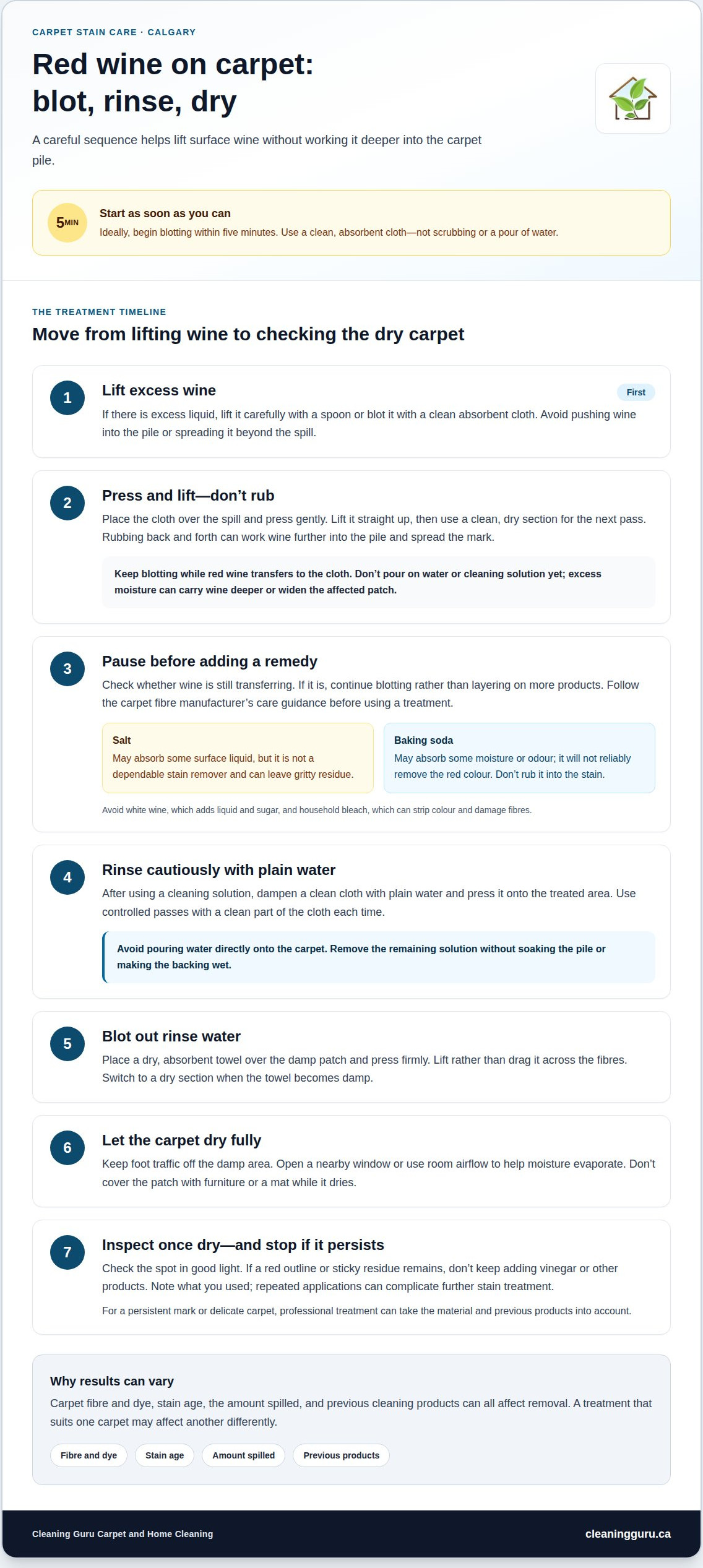
1. Place a clean, absorbent cloth over the spill and press gently to lift wine from the carpet. Treat the area as soon as possible, ideally within five minutes. Move to a clean part of the cloth as it absorbs the liquid, so you don't press wine already collected back into the fibres.
Check the cloth as you work. If it picks up red wine, keep blotting with a fresh, dry section. Don’t pour on water or cleaning solution yet. Excess moisture can carry the wine deeper into the carpet or spread it across a wider patch.
Blot Instead of Rubbing
2. Press down and lift the cloth; don't scrub back and forth. Rubbing can work wine further into the carpet pile and spread the stain beyond its original edges. Keep your movements controlled, starting at the spill and pressing the cloth directly onto the affected fibres.
Use a clean cloth for each pass, especially when the first one looks saturated. Check the carpet between presses: if the red mark is still transferring, continue blotting rather than adding more product. This simple step limits disturbance to the pile while lifting surface liquid.
- Use baking soda cautiously. It may absorb some remaining moisture or odour, but it won't reliably remove the red colour. Don't rub the powder into the stain.
- Follow carpet care guidance. Check the fibre manufacturer's maintenance instructions before applying a stain treatment. Carpet fibres and dyes can react differently to cleaning products.
- Avoid product layering. Don't keep adding different remedies when the mark remains. Multiple products can complicate later stain treatment.
If baking soda leaves the carpet looking dusty while the red mark remains, stop adding powder and avoid scrubbing. The next treatment should suit the carpet fibre and dye, not just the stain.
Does Salt Remove Red Wine From Carpet?
Salt can absorb some surface liquid, but it isn't a dependable way to remove an established red wine stain. The carpet’s fibre, dye and stain history all influence the result.
Remove Excess Red Wine
- Lift excess wine with a spoon or blot it with a clean absorbent cloth. Work carefully so you don't push liquid into the pile or spread it beyond the spill.
- Use a fresh section of cloth as it becomes damp. Stop once no more wine transfers, then assess the stain before choosing another treatment.
Removing surface wine first limits how much liquid remains to treat. Avoid sprinkling salt over a saturated patch: damp crystals can mix with wine and lodge between carpet fibres.
Consider Stain-Removal Factors
- Check the carpet fibre and dye before applying vinegar or another cleaning solution. A treatment suitable for one carpet may affect another differently, and the wrong product can damage fibres or colour.
- Consider the stain’s age, the amount spilled and any previous cleaning products. A small, fresh spill on one carpet can respond differently from an old, larger stain on another.
Physical or chemical damage can also affect stain removal. Home treatment may clear much of a stain before progress stalls, while repeated applications can complicate further cleaning.
Avoid Common Myths and Risks
- Don't rely on salt to remove the stain. It can leave gritty residue, and a Calgary carpet treated with salt may develop a larger, dingy grey patch within six months.
- Skip white wine as a remedy. It adds liquid and sugar, which can spread the mark and leave carpet sticky. Never use household bleach, which can strip colour and damage fibres.
Hydrogen peroxide may damage some carpets, so check the care guidance and test a hidden area first. For a dried stain on light-coloured synthetic carpet, the suggested treatment is 3% hydrogen peroxide, tested on a hidden area first. If salt or a home cleaning attempt leaves a persistent mark, professional stain treatment can assess the carpet material and previous products before further removal.
Rinsing and drying carpet
After treating a red wine mark, remove leftover cleaning solution carefully. Rinse with plain water, then lift moisture from the carpet instead of soaking it.
- Prepare a light rinse. If you use a cleaning solution, apply it cautiously and rinse the area with plain water afterward. Dampen a clean cloth with plain water, then press it onto the treated area. Avoid pouring water directly onto the carpet. A lightly damp cloth helps remove residue without sending excess moisture deeper into the pile.
- Rinse in controlled passes. Press the damp cloth over the spot, lift it, and check the carpet. Use a clean part of the cloth for each pass. Continue until you’ve removed the remaining solution, but stop before the backing feels wet. For example, a small wine mark needs attention only across its treated area.
- Blot out the rinse water. Place a dry, absorbent towel over the damp patch and press firmly. Lift the towel rather than dragging it across the fibres. Replace it with a dry section when it becomes damp. This step draws out moisture and helps prevent cleaning residue from remaining near the carpet surface.
- Let the carpet dry fully. Keep foot traffic off the damp area while it dries. Open a nearby window or use room airflow to help moisture evaporate. Don’t cover the patch with furniture or a mat; trapped dampness can slow drying. Check the carpet pile before using the space again.
- Inspect the spot after drying. Look at the treated area in good light once it feels dry. If a red outline or sticky residue remains, don’t keep adding vinegar or other products. Repeated applications can leave more residue and complicate stain removal. Note what you applied, so the next treatment can account for it.
Use a restrained amount of water throughout rinsing and drying. A damp cloth, fresh towels and steady airflow give you more control than saturating the carpet to flush out a stain.
Professional red wine stain treatment in Calgary
Red wine carpet stain treatment in Calgary starts with matching the method to the carpet and the stain’s history. Old marks may need several careful treatments, especially after household products have been applied.
Address a Dried Red Wine Stain
- Use a fibre-appropriate treatment. For a dried stain, apply a suitable treatment and let it dwell for 10-15 minutes before blotting. Check the carpet’s care guidance first, since fibres and dyes can react differently. Avoid scrubbing or flooding the area; excess water can push wine deeper and enlarge the affected patch.
A light-coloured synthetic carpet and a wool runner need different care. Some carpet fibres and dyes can react differently to cleaning products, so check the carpet’s care guidance before using them. If earlier products left residue, note what you used before trying another treatment.
Choose Professional Stain Treatment
- Bring in a cleaner for a persistent mark. Old red wine stains often need 2-4 treatment cycles. A professional can assess the stain’s age, spill size, carpet fibre and dye, along with previous products or physical damage, before selecting an approach.
Professional cleaning can sometimes improve an old stain, though results vary with the carpet and stain conditions. For red wine carpet stain treatment in Calgary, tell the cleaner what you applied so they can plan the next steps and avoid layering incompatible products.
Decide When to Hire a Cleaner
- Seek professional help for difficult or delicate cases. Hire a cleaner if the stain has been on the carpet for more than a few days, remains after careful home treatment, or covers a large area on a wool runner.
A stair runner also merits professional attention because water can reach the underlay. If you need red wine carpet stain treatment in Calgary, get help with carpet stain cleaning rather than continuing to apply household products.
Cleaning Guru Carpet and Home Cleaning: Residential Carpet Cleaning
Cleaning Guru Carpet and Home Cleaning offers residential carpet cleaning in Calgary for wine marks that remain after careful home treatment. Consider professional cleaning when repeated spot attempts leave residue or the affected area needs attention. Share which products you used and whether the stain is fresh or dried to help guide the cleaning approach.
Cleaning Guru also offers commercial carpet cleaning for Calgary workplaces and upholstery cleaning for furnishings. If home treatment hasn’t worked, residential carpet cleaning can be a practical next step instead of adding more household products.
Contact Cleaning Guru Carpet and Home Cleaning or visit cleaningguru.ca to discuss your carpet cleaning needs.
Choose a Careful Next Step for Your Carpet
A lingering wine mark can make it tempting to try one more household remedy. Pause before adding another product. Note what you’ve already applied, and consider whether further spot treatment could affect the carpet’s colour or texture. This information can help guide your next decision without layering on more cleaning products.
If you still need red wine carpet stain treatment in Calgary, choose a next step that fits your carpet and the stain’s history. Cleaning Guru Carpet and Home Cleaning offers residential and commercial carpet cleaning, as well as upholstery cleaning. The stain’s appearance and the carpet material help shape the approach, so share what happened and what you’ve tried.
Contact Cleaning Guru Carpet and Home Cleaning to discuss your carpet cleaning needs. A measured approach can help you move forward with greater confidence.
Frequently Asked Questions
How long can a red wine stain sit before it becomes permanent in carpet?
There’s no fixed point when every red wine stain becomes permanent. The longer wine remains, the more it can dry into the fibres, making removal harder. A stain left overnight may need a different approach from a fresh spill. If it has been there for a few days, avoid repeated home treatments and consider professional cleaning.
How much does professional carpet stain removal cost in Calgary?
The cost depends on the stain’s size and age, carpet material, and previous cleaning attempts. A small mark on one carpet may need a different approach from a large spill or a stain on delicate fibres. For Cleaning Guru Carpet and Home Cleaning, the price depends on the case and is provided after a quote request. Customers can request a free estimate.
How quickly should I treat a red wine stain?
Start as soon as the spill happens, ideally within five minutes. Prompt attention lets you absorb more wine before it dries into the carpet. For example, if wine spills during dinner, pause cleanup and use a clean cloth before serving or moving furniture across the spot. Waiting until the next day gives the stain more time to set.
Is red wine stain treatment safe on wool, polypropylene and washable runners?
Use a treatment suited to the material, and follow the carpet or runner’s care instructions. Avoid hydrogen peroxide on wool, dark carpet or patterned runners because it can bleach them. Polypropylene is synthetic, but test any product in a hidden area first. For a washable runner, follow its care label and don’t heat-dry it until the stain is gone.
What products work best for red wine stains in Calgary homes?
No single household product suits every carpet. A mild dish-soap solution may work for some fresh stains, while vinegar’s suitability depends on the carpet fibres and dyes. Check care instructions and test products discreetly before treating a visible area. Avoid combining cleaners: residue from one product can affect how another works and complicate later treatment.
What should I do immediately after spilling red wine on carpet?
Move nearby items out of the way, then press a clean, absorbent cloth onto the spill to lift the liquid. Work from the outer edge toward the centre to limit spread, and use a fresh cloth section as it absorbs wine. Keep chairs and foot traffic off the area. Don’t scrub or add multiple cleaners before checking the carpet’s care guidance.


